So many gods!
They’re like books — you can’t read everything, you never know anything.
Happy the man who knows but one god, and keeps him a secret.
Every day I have different beliefs —
Sometimes in the same day I have different beliefs —
And I wish I were the child now crossing
The view from my window of the street below.
He’s eating a cheap pastry (he’s poor) without efficient or final cause,
An animal uselessly raised above the other vertebrates,
And through his teeth he sings a ribald show tune ...
Yes, there are many gods,
But I’d give anything to the one who’d take that child out of my sight.
But then there's this, instead:
Which do you prefer? One is a translation of a poem by Portuguese poet Fernando Pessoa. The other isn't.From summer evenings, gazing heartrise always ahead, there, book and dream, reaching out, ten miles of fields of raw daffodils streets engines advertisement hoardings all raw, o. myself raw, but certain. Swept now, swept book dream field street engines cheerfully off or rusted hoardings ablaze or demolished nobody there Not unfound not unreached, unborn unfated Dear illusion with the bright hair all swept aired lit plain known listed swept

Not to leave you in suspense, the first, "So many gods!", is by a certain Álvaro de Campos. The second, "Unborn", is by Ted Potter.
Neither of these poets ever existed. Álvaro de Campos, with a "reputation for a powerful and angry style of writing", was the most prolific of Pessoa's many pseudonyms - or "heteronyms", as he preferred to call them. He's also one of the "big three": Alberto Caeiro, the pastoralist, "The Keeper of Sheep"; Ricardo Reis, a "doctor and Neoclassical poet who wrote neopagan, epicurist and stoicist odes"; and - Álvaro de Campos.
Ted Potter is a character in a short story, "Dear Illusion", by English novelist Kingsley Amis. The idea of the story is that Potter is a famous, highly acclaimed poet who doubts if he actually is a poet. He suspects that what he writes is really a form of self-therapy which takes the form of verse, and which therefore shouldn't be confused with the "real thing."
Here's what Potter tells his interviewer, a bright young Cambridge smarty-pants called Sue Macnamara, who's been commissioned to write a feature on him for a prestigious journal:
… Sue tried to keep up her bright, nurse-like tone. ‘Another over-simplifying question, I’m afraid, Mr Potter: why do you write poetry?’As I commented when I quoted the passage above in a 2000 essay on the poetics of Alan Loney:
‘No, I think it really is a simple question. Or perhaps I just mean the answer I personally would give’s quite simple. I write poetry to be able to go on living at all. Well, not quite at all, but to function as a human being. ... When I was working in that timber yard, my life started being a burden to me. Not just the life in the yard, but the whole of my life. … Then, after about a month, some words came into my mind and straight away I felt a little better. I forget what they were, but they brought more words with them and they made me feel a little better still. By the time the words stopped coming I felt at peace. I wrote them down on the back of a delivery note – I do remember that – and it was only then I woke up to the fact that what I’d done was write a poem. The moment I’d finished writing the words down I started feeling bad again. Not as bad as just before the words started coming, but still bad. The next day I felt a little worse, and the day after that worse again, and so on for another three or four weeks until another lot of words started turning up. It’s been like that ever since.’
the point of Amis’s story seems to be that Potter is, in fact, a fraud – not the great writer he’s touted to be. Sue, whom he asks to resolve the question, decides that his own explanation is in fact the correct one, and that Keats, Milton and Hopkins, his alleged peers, are poets in quite a different sense:‘… it’s all rather like that business they call occupational therapy, where people weave carpets to take their mind off themselves and their problems. The point there is that it doesn’t make any difference to anybody whether the carpets are any good or not. I’ve been wondering for over thirty years, on and off, if it’s the same with my poems.’Perhaps the reason Potter is no poet is because he’s prepared to be judged by Sue, to set her up as his own personal King Minos. Then again, perhaps that’s what tells us he is a poet – perpetual dissatisfaction with your own work, your own methods, your own claims to fame, might be the mark of the beast.

It's a very strange story, by a very strange man. Kingsley Amis always claimed to detest "experimental" writing - such as the Potter poem quoted above. And Sue's verdict on it is suitably cutting:
its theme [was] effortlessly plain to her - and this, in turn, suggested an unpalatable reason for Potter's success with critics and public: he wrote in a way that looked and felt modern, or at any rate post-Georgian, but with a certain amount of effort could be paraphrased into something quite innocuously traditional, even romantic. And the reader's self-satisfaction at having made his way through apparent obscurity could easily be transmuted into affection for poem and poet.But the fact that he's given her what appears to be the only copy of the poem - Potter never types out his work, and tries not to read it even after it's been published - makes her also feel a strange sense of responsibility towards it: "the nearest imaginable comparison to how she felt was, it turned out, how she would feel if she were to show up a child's ignorance publicly."
Had Potter not given her the manuscript there would have been no issue, but he had, and she had met him and listened to him, and so the poem took on the quality of a friend's muffled cry of distress without, unfortunately, ceasing to be a poem in its own right and demanding to be read as one.Her assessment of it as a whole is rather more interesting than her pedantic objections to Potter's technical deficiencies ("were there not too many "-ings' in the first half-dozen lines, and had 'hair' been intended to rhyme with 'there' in an otherwise rhymeless poem? And 'heartrise' ... was just the sort of thing poets got rid of in revision"):
In 'Unborn' ... Potter, or some version of Potter, was just saying that an ideal he had pursued since youth had turned out to be not unrealized but unrealizable, because its object had never existed. What that object might have seemed to be was less plain: 'dear' along with 'bright hair' certainly suggested a woman ... But then, the brief and unspecific image of the 'dear illusion' might so easily refer not to a person at all, but to some abstraction dimly seen as a person, and almost any abstraction of the nicer sort would fit: love, happiness, beauty, joy, adventure, self-respect, self-mastery, self-sufficiency, God ...But of course we can guess what that "dear illusion" actually is: the illusion that what he writes down is actually poetry. The story ends with Potter committing suicide in despair, after some doggerel he scribbled as a kind of test for the reading public is praised just as highly as his "real" poems.

Kingsley Amis was a poet himself. In fact, his very first book, Bright November (1947), was as lyric as lyric could be. I should know - I seem to be one of the very few people on Earth who've actually read it. He quickly decided that his real talent was for prose, but continued to write clipped, tidy, no-nonsense poems for most of his life.
It was, in some ways, as if he and his university friend Philip Larkin had decided to swap places. Larkin was to be the novelist - he published two wonderfully polished novels in the late 1940s, then stalled on a third. Amis was to be the poet - but instead he wrote the unexpectedly successful Lucky Jim (1954).

"Dear Illusion" strikes deeper - much deeper - than I think its author intended. Few of us would be capable of interpreting Ted Potter's poem as deftly as Sue does. But her real advantage is that she's simply a mouthpiece for the man who wrote it. He knows what he intended - whether he actually got it all down on the page or not. And what could be more fun than slagging off your own bad writing when you wrote it intending it to be bad?
It's not bad, though. It may not be as good as the work of fictive Australian Modernist Ern Malley, but it's an interesting poem. Like Sue, there are a few things I would like to change in it, but Amis is too good a writer to perpetrate anything really dreadful in his own showpiece story. It has to be good enough to fool everyone else until they're told otherwise - but no better than that - quite a difficult prescription for any writer.
But not an impossible one.


I imagine, by now, you can see where I'm going with this. Is Fernando Pessoa a good poet? Not really - not in his own right, at any rate. But then there are so many of him that the question tends to get endlessly deferred.
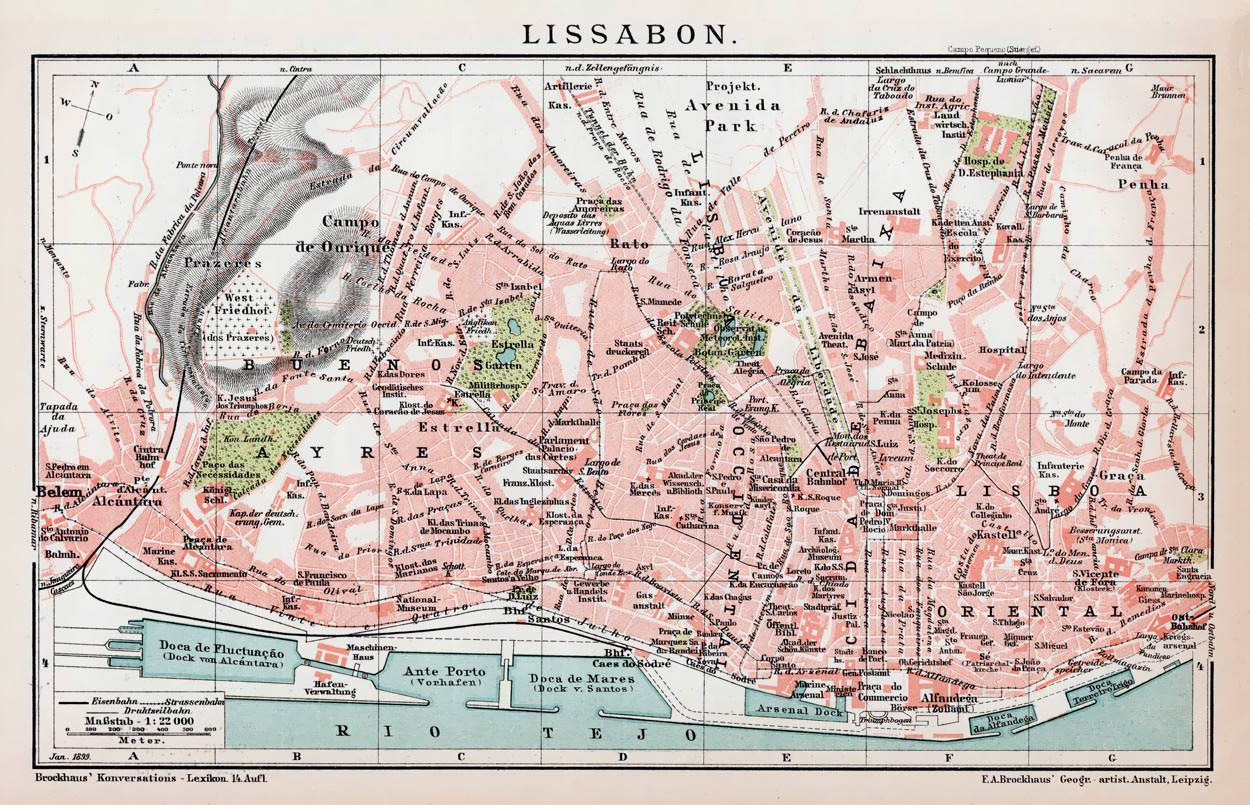
When I was in Lisbon for a conference in 2018 it was an open secret there that most of the Portuguese writers and Academics attending thought Pessoa a fraud: either that, or they were just intensely bored by him. One of them told me she didn't even believe in the famous "chest of manuscripts" all his posthumous productivity had flowed from: "He only had three other identities anyway - the rest are just phantoms."
One of the trinkets I bought there was a Pessoa fridge magnet that proclaimed:
Eu não escrevo em português.
Escrevo eu mesmo.
I asked the lady who sold it to us to translate it. She told us it meant "I don't write in Portuguese. I write myself." Then she added, "But it's really banal ..."
I don't think it's too much of an exaggeration to see Pessoa - his name means "person" in Portuguese: as in, perhaps, anybody and everybody - as Ted Potter. Potter writ large, admittedly - Potter sprawled across every classroom, every university curriculum. But in the story, that's precisely the level of visibility Potter's supposed to have attained.

One wonders at times if Amis didn't layer just a little of Philip Larkin into Potter. Larkin was, after all, notoriously publicity-shy - and yet somehow very good at attracting it. That crack about 2,000 Boy Scouts reciting "They fuck you up, your mum and dad" on Salisbury Plain (as allegedly happened with W. B. Yeats's "Lake Isle of Innisfree") wasn't as far from the truth as he liked to pretend.
Latterly the two weren't quite such good friends as they'd been in their salad days. Larkin in particular said some horribly cutting things about just how bad he thought some of "Kingers'" novels were. He even claimed that Lucky Jim only got published because of all the pruning and editing he'd done on the manuscript. And Larkin really is the only twentieth century English poet on the scale Amis attributes to Potter ...
In any case, I've already quoted, above, one poem by Fernando-Pessoa-as-Álvaro-de-Campos. Let's look at some more by his other poetic incarnations:

O Guardador de Rebanhos XLVII Num dia excessivamente nítido, Dia em que dava a vontade de ter trabalhado muito Para nele não trabalhar nada, Entrevi, como uma estrada por entre as árvores, O que talvez seja o Grande Segredo, Aquele Grande Mistério de que os poetas falsos falam. Vi que não há Natureza, Que Natureza não existe, Que há montes, vales, planícies, Que há árvores, flores, ervas, Que há rios e pedras, Mas que não há um todo a que isso pertença, Que um conjunto real e verdadeiro É uma doença das nossas ideias. A Natureza é partes sem um todo. Isto é talvez o tal mistério de que falam. Foi isto o que sem pensar nem parar, Acertei que devia ser a verdade Que todos andam a achar e que não acham, E que só eu, porque a não fui achar, achei. - Alberto Caeiro (1914)• On an incredibly clear day, The kind when you wish you'd done lots of work So that you wouldn't have to work that day, I saw – as if spotting a road through the trees – What may well be the Great Secret, That Great Mystery the false poets speak of. I saw that there is no Nature, That Nature doesn't exist, That there are hills, valleys and plains, That there are trees, flowers and grass, That there are rivers and stones, But that there is no whole to which all this belongs, That a true and real ensemble Is a disease of our own ideas. Nature is parts without a whole. This is perhaps the mystery they speak of. This is what, without thinking or pausing, I realized must be the truth That everyone tries to find but doesn't find And that I alone found, because I didn't try to find it.
- trans. Richard Zenith (1998)
•
It's not entirely banal. There's some tricky thinking in there. And perhaps it all sounds a bit more pointed in Portuguese. But it's not really in the class of most of the other poets we've been looking at so far in this series.
But after all - there's always that escape clause - it's not by Pessoa, it's by his simpler incarnation "the keeper of sheep". What can be expected from such a pastoral quietist than something blandly affirmative: but still with a slight hint of a self-mocking edge?
On we go, then. Here's another one, this time by that austere classicist Ricardo Reis - with a different set of translators, too:

Coroae-me de rosas. Coroae-me em verdade De rosas. Quero ter a hora Nas mãos pagãmente E leve, Mal sentir a vida, Mal sentir o sol Sob ramos. Coroae-me de rosas E de folhas de hera E basta. - Ricardo Reis (1914-35)• Crown me with roses. Yes, really, crown me With roses. I want to hold the hour In my hands paganly, Lightly, Barely feeling life, Barely feeling the sun Beneath the branches. Crown me with roses And with ivy leaves, Nothing more.
- trans. Margaret Jull Costa & Patricio Ferrari (2026)
•
We're fortunate, this time, to have access to a comprehensive translator's note about the poem:
Ricardo Reis, Fernando Pessoa’s most formally disciplined heteronym, emerged in 1914 as a doctor born in Oporto, shaped by Horace’s Latin lyricism — inflected by Stoic and Epicurean thought — and by the lapidary clarity of The Greek Anthology ... His odes, composed between 1914 and 1935, ... [are] conceived throughout in short lines, apt for sententious diction ... a longer line (say of ten or twelve metrical syllables) would invite discursiveness. The hexassílabo ["six poetic syllables"] ... forces aphoristic phrasing. Each line becomes a propositional unit, almost like a maxim.The lines above are certainly compact and pithy. Whether they could be claimed to be aphoristic is, I suppose, a matter of taste. I can certainly see a play there on Horace's carpe diem [Odes 1:11] - perhaps even Robert Herrick's "Gather ye rosebuds while ye may" (1648). Pessoa was, after all, a confirmed devotee of English poetry.
In the letter to the Portuguese literary critic Casais Monteiro, dated January 13, 1935, Pessoa said of his own heteronym, Ricardo Reis: “He writes better than I do, but with a purism I find excessive.” In translating Reis, we were conscious of a meticulous classical mind at work. The diction is not obscure, but Reis often expresses himself with a compactness that is hard to preserve in English.
He may also have had in mind the inspiration for Herrick's poem, Ronsard's "Cueillez dés aujourd’huy les roses de la vie" [Pluck today the roses of life] (1578). But the only really interesting feature of the poem, to me, is its author's apparent embarrassment at resorting to an image as hackneyed as a crown of roses in the first three lines. Other than that, it's a bit difficult to see where he's going with it.
Onwards and upwards, though. Here's another poem by Álvaro de Campos to complete our hat-trick of the major players:

“Sim, não tenho razão” Sim, não tenho razão ... Deixa-me distrahir-me do argumento inutil, Não tenho razão, está bem; é uma razão como outra qualquer ... Se nem oiço? Não sei. Creio que sim. Mas repete. O amor deve ser constante? Sim, deve ser constante. Só no amor, é claro. Dize ainda outra vez ... Que embrulhadas a gente arranja na vida! Sim, está bem, amanhã trago o dinheiro. Ó grande sol, tu não sabes nada d’isto, Alegria que se não pode fitar no azul sereno inattingivel. - Álvaro de Campos (1931)• No, you’re right, I’m wrong ... Allow me to drift off from this pointless argument, I’m wrong in my opinion, that’s fine, I’m not deeply attached to that opinion anyway ... I’m not even listening, you say? I don’t know. I think I am. But repeat what you just said. Love should be constant? Yes, it should be constant. But only in love, of course. Say it again, will you? ... People make life so very complicated! Yes, fine, I’ll bring the money tomorrow. O great sun, you know nothing of this, A joy we cannot even contemplate in the serene blue unreachable sky.
- trans. Margaret Jull Costa & Patricio Ferrari (2023)
•
Once again, it comes with a translator's note:
Álvaro de Campos was one of the three major heteronyms created by Portuguese poet Fernando Pessoa, who gave each heteronym (there were nearly 140 fictitious authors) a thorough biography, which included a set of signatures, an astrological chart, literary influences, and philosophical idiosyncrasies. Campos, according to him, was born in Tavira (Algarve) on October 15 (like Friedrich Nietzsche) but of 1890. He studied mechanical engineering and shipbuilding in Glasgow yet never completed the course. Campos subsequently traveled to Ireland and the Near East, then worked in Newcastle-on-Tyne and Barrow-on-Furness (sic) before returning to Lisbon, where he lived until the death of his creator in 1935. His earlier poems are often a futurist celebration of the modern machine age, and his style owes much of its energy and ebullience to Marinetti and Walt Whitman, as well as Blake and Nietzsche.That's a lot to deduce from a pretty short piece. Of course, it's meant more as a statement on the nature of Álvaro de Campos's work as a whole. Once again, though, there is a certain banality in that face-saving dictum that "Not to have opinions is to exist". Existence - or the lack of it - seems to have been a central problem for Pessoa.
This particular poem, however, written in November 1931, belongs to a later phase — full of sour pessimism, and a sense of the futility of life. The speaker of the poem engages in a conversation in which he has absolutely no interest. We, the reader, are plonked down in the middle of this one-sided exchange and made to feel the exasperation, the ennui, in which these few lines are steeped. And we are left to ponder what kind of relationship this is, involving, as it does, both love and money. Then there is the surprise of those last two lines: “O great sun, you know nothing of this,/A joy we cannot even contemplate in the serene blue unreachable sky,” when the poem suddenly seems to take a deep breath and open out into the whole universe. So simple and so complex.
Interestingly, this monologue-like poem, unpublished during Pessoa’s lifetime, reveals what is at the core of Pessoa’s poetics, namely, the generative force of “un-fixedness” — be it an argument, a poetic creed, or any belief whatsoever: “I’m wrong in my opinion, that’s fine, I’m not deeply attached to that opinion anyway...” affirms the speaker at the end of the opening stanza. In December 1930, a little less than a year before this poem was written, Campos wrote a fragmentary note — in prose this time and also posthumous — which could serve as the motto of Pessoa’s heteronymic project: “To have opinions is to betray oneself. Not to have opinions is to exist. To have all possible opinions is to be a poet.”
I guess that I tend to read this poem too as, essentially, a gag. The speaker is waxing eloquent about the fact that he's willing to concede a point (whatever it is: something about love - and constancy in love) to his interlocutor. I suspect, though, this is to avoid a confrontation which might bring up the awkward fact that he's in debt to the person he's talking to ("Yes, fine, I’ll bring the money tomorrow").
That, to me, is far more important than all those poeticisms about the sun and the sky at the end. People who don't want to pay back the money they've borrowed are generally quite anxious to steer the conversation onto a higher path, and tend - if they've got any sense - not to contradict their creditors too vociferously. Isn't that the more psychologically plausible way to read this poem?
Let's conclude with one more, this time written under the poet's own name:

A morte é a curva da estrada A morte é a curva da estrada, Morrer é só não ser visto. Se escuto, eu te ouço a passada Existir como eu existo. A terra é feita de céu. A mentira não tem ninho. Nunca ninguém se perdeu. Tudo é verdade e caminho. - Fernando Pessoa (1932)• Death is a bend in the road, To die is to slip out of view. If I listen, I hear your steps existing as I exist. The earth is made of heaven. Error has no nest. No one has ever been lost. All is truth and way.
- trans. Richard Zenith (2006)
•
This rather sententious set of verses is very popular online. And it does have a certain air of the work of such Instapoets as Rupi Kaur or Lang Leav: simple thoughts, expressed simply, with an (apparent) complete lack of nuance or irony.
That's five Pessoa-brand poems we've looked at now, and a faint sense of sarcastic self-parody seems to be their principal unifying feature. Is this really the kind of work we should expect from a major poet? "Could do better" is likely to be scrawled on the bottom of this report card unless a certain Senhor Pessoa pulls his socks up next semester ...

Marcel Duchamp's decision to submit a urinal as his entry for the inaugural exhibition of the Society of Independent Artists at the Grand Central Palace in New York is still reverberating almost a century on. Duchamp explained that he saw such "ready-mades" as:
everyday objects raised to the dignity of a work of art by the artist's act of choiceThis deliberately provocative act has emboldened (and infuriated) visual artists every since. But it's had quite an effect on writers too - albeit more in slow motion.
In his introduction to All What Jazz (1970), a collection of music reviews, Philip Larkin gave vent to his detestation of experimentalism in general:
This is my essential criticism of modernism, whether perpetrated by Parker, Pound, or Picasso: it helps us neither to enjoy nor endure. It will divert us as long as we are prepared to be mystified or outraged, but maintains its hold only by being more mystifying and more outrageous: it has no lasting power.Larkin's "unholy trinity" of Charlie Parker, Ezra Pound, and Pablo Picasso, had (he lamented) ruined respectively: a/ the joyful sounds of Jazz with bebop improvisations; b/ the craft of poetry with the sprawling, incomprehensible Cantos; and c/ the subtle delights of representational art with Cubist distortions. If he'd known more about him, Larkin might well have added Pessoa as to this litany of "P's".

Duchamp, however, was far more radical than even these three revolutionaries. Like Pessoa, he was initially influenced by Dada in adding an absurdist undercurrent to hs work. Both used pseudonyms to sign their work, and both were propelled into innovation by the apparent failure of "civilisation" (so-called) to halt or curtail a certain apocalyptic War to end all Wars.
To call Pessoa a bad poet, then, is a little like calling Duchamp an incompetent artist. Of course he is. That's the whole point. If you want an Old Master drawing, Duchamp is indeed the wrong person to ask. Similarly, if you want a truly heartfelt lyric in the grand tradition, you're unlikely to find any in the immense stack of ready-mades created by Pessoa under his (literally) innumerable series of names.
In his final, unfinished novel, Bouvard et Pécuchet (1881), Gustave Flaubert told the tale of two bank-clerks who inherit enough money to move to the country and attempt there to master the world's collective wisdom:
Their search for intellectual stimulation leads them, over the course of years, to flounder through almost every branch of knowledge.

They embody the fruits of their research in a ledger called Le Dictionnaire des idées reçues [The Dictionary of Received Ideas]. These "received ideas", as the name suggests, are the stupidest, most inane platitudes these two idiots can find in the piles of books they plough through. Flaubert's last message to the world was a grimace of disgust.
Perhaps, then, instead of ready-mades, it might be better to refer to Pessoa's multifarious stack of poems as idées reçues? Their merit or lack of it is hardly the point - they're meant not so much to perform as poems, as to call into the question the whole idea of a "poem".
Amis, too, raises this doubt in his own story. For him, though, there's still a stratosphere of "real" poets - Milton, Shakespeare ... Larkin? - who no longer abide our question. Potter may be no poet - just a potterer (get it)? - but those others definitely are.
But why are they? What's the difference between him and them? Why not a urinal instead of the Mona Lisa? If it's all in the artist's intentions, then what makes that particular person's ideas so important? Why can't everyone be an artist, collecting ready-mades and recycling clichés? Isn't recycling clichés all that any writer does, for that matter?
Pessoa had a lively sense of humour - so much is clear. He pulled off an immense conjuring trick in the face of the world. It didn't pan out so well for him during his lifetime - most of his contemporaries saw him as a drink-cadging ne'er-do-well - but when the series of constructs called "Pessoa" really got going, a decade or so after his death, the whole thing really took off. Witness the gift-shops groaning with Pessoa-iana all over Portugal - not for the locals, you understand, but for those gullible tourists ...

Nobel-prize-winning Portuguese poet and novelist José Saramago was well aware of all this when he wrote his own strange, elegiac account of the gradual fading of the poet's alternate identities after his death, in a dreamy Lisbon unruffled by the distant turmoil of the Spanish Civil War.
Ricardo Reis returns from Brazil after receiving the news of his fellow poet's death, but it takes him some time to muster up the courage - or is it despair? - to follow his colleague into the grave. Saramago's novel - like Pessoa's rather aimless life - embodies perfectly the Portuguese notion of saudade:
an emotional state of melancholic or profoundly nostalgic longing for a beloved yet absent someone or something ... It is often associated with a repressed understanding that one might never encounter the object of longing ever again ... Duarte Nunes Leão defines saudade as, "Memory of something with a desire for it".

I hadn't yet properly formulated these theories of Pessoa as poet-trickster extraordinaire when I wrote my blogpost "Pessoa World", shortly after returning from Portugal. I concluded it, however, with the following phrase: "Joke or not, Pessoa is here to say." My friend Martin Edmond commented on this:
A joke, Jack? What kind of joke? Shaggy dog story?I didn't know how to answer him at the time, but now I think I do. The joke - if joke it was - is on all of us. We've pored over Pessoa as if he were a major poet in the conventional sense. Those of us with no Portuguese have assumed that the magic and mystery and wordcraft must all be hidden away in the original, since - in translation - they so conspicuously fail to appear. Hence, too, the immense popularity he retains with tourists and academics and other outsiders - but not so much with his fellow Lusophones.
But the real joke is that he really is a great poet: one far more in the tradition of Duchamp and Flaubert (or Jorge Luis Borges) than the other great modernists. He is - to coin a phrase - more conceptual. His poems and identities hold up two fingers in the face of "poetry" and "literature" and "art" - of identity itself. He was thoroughly postmodern avant la lettre, rather than just another avatar of that terrible trio Parker, Pound, and Picasso. They were all about self-expressive disruption. He's about disruption on a cosmic scale.
Pessoa is not someone to patronise, even if (like me) you happen to have a pair of cardboard Pessoa bookends sitting at either end of your shelf. If he doesn't frighten you yet, you haven't really understood him. We don't really need two Duchamps, or any more satirical novels like Bouvard et Pécuchet. If you didn't get it the first time, it's unlikely to succeed by repetition.
We only need one Pessoa. He's unique because he's plural. He became a poet by denying that such a thing could ever exist.


The poem I've chosen to present here in the usual multiple translations is called "Autopsicografia". I guess this is fitting, given that autopsychography (or self-psychoanalysis) is at the heart of Pessoa's labyrinth, however empty that space may turn out to be.
Once again, it's by him in propria persona, rather than one of his alter-egos. And once again we're forced to recognise just how little difference that makes:

-
Autopsicografia
- Autopsychography
- The poet fancying each belief
- Autopsychography
- Autopsychography
- Autopsychography
- Autopsychography
- Autopsychography
- Fernando Pessoa (1932)
O poeta é um fingidor.
Finge tão completamente
Que chega a fingir que é dor
A dor que deveras sente.

E os que lêem o que escreve,
Na dor lida sentem bem,
Não as duas que ele teve,
Mas só que éles não têm.

E assim nas calhas de roda
Gira, a entreter a razão
Ésse comboio de corda
Que se chama o coração.

- trans. Edouard Roditi (1955)
The poet is a man who feigns
And feigns so thoroughly, at last
He manages to feign as pain
The pain he really feels,

And those who read what once he wrote
Feel clearly, in the pain they read,
Neither of the pains he felt,
Only a pain they cannot sense.

And thus, around its jolting track
There runs, to keep our reason busy,
The circling clockwork train of ours
That men agree to call a heart.

- trans. Roy Campbell (1960)
The poet fancying each belief
So wholly through and through
Ends by imagining the grief
He really feels is true.

And those who read what he has spelt
In the read grief feel good --
Not in the two griefs he has felt,
But one they never could.

Thus to beguile and entertain
The reason, does he start,
Upon its rails, the clockwork train
That's also called the heart.

- trans. Michael Hamburger (1969)
(Poets feign and conceal
So completely feign and pretend
That the pain which they really feel
They'll feign for you in the end

And he who reads what they've done
Never senses the twofold pain
That's in them, only the one
Which they never feel but feign

And so, to amuse our minds
Round again to the start
On its circular railway winds
That toy train called the heart.)

- trans. Jonathan Griffin (1974)
Poets are people who feign
They feign so thoroughly,
They'll even mime as pain
The pain they suffer really.

Read what a poet has said --
In the pain on the page you discern
Not the two he had,
Only one they disown.

So on the circular track,
To keep the mind happy, it
Runs on, round and back --
This clockwork train called the heart.

- trans. Edwin Honig (1986)
The poet is a faker. He
Fakes it so completely,
He even fakes he's suffering
The pain he's really feeling.

And those of us who read his writing
Fully feel while reading
Not that pain of his that's double,
But one completely fictional.

So on its tracks goes round and round,
To entertain the reason,
That wound-up little train
We call the heart of man.

- trans. Keith Bosley (1995)
The poet is a fake.
His faking seems so real
That he will fake the ache
Which he can really feel.

And those who read his cries
Feel in the paper tears
Not two aches that are his
But one that is not theirs.

And so in its ring
Giving the mind a game
Goes this train on a string
And the heart is its name.

- trans. Richard Zenith (2006)
The poet is a faker
Who’s so good at his act
He even fakes the pain
Of pain he feels in fact.

And those who read his words
Will feel in his writing
Neither of the pains he has
But just the one they’re missing.

And so around its track
This thing called the heart winds,
A little clockwork train
To entertain our minds.

Well, I don't want to say I told you so, but it's hard to see how Pessoa could have been any franker about his intentions. O poeta é um fingidor, he wrote. This is how our translators expressed that idea in English:
Edouard Roditi (1955):Could it be that Pessoa wanted to tell us, yet again, that all poets were fakes? And, by extension, that he too was a fake? Surely not! That would be too obvious altogether.The poet is a man who feignsRoy Campbell (1960):The poet fancying each beliefMichael Hamburger (1969):(Poets feign and concealJonathan Griffin (1974):Poets are people who feignEdwin Honig (1986):The poet is a fakerKeith Bosley (1995):The poet is a fakeRichard Zenith (2006):The poet is a faker
Poets say lots of things, though, and we've become accustomed to regarding most of them as fanciful exaggerations. "The truest poetry is the most feigning," said Shakespeare in As You Like It (Act 3: sc.3), but of course it's the clown who says it in context - so perhaps he didn't mean it ... Then again, maybe he did.
Marc Weidenbaum's webpage "Disquiet: Pessoa's Trunk. Thirteen Ways of Looking at 'Autopsicografia'" (2009) presents no fewer than 16 different versions of the poem above. Even this compendium is not complete, however. Edouard Roditi's translation is not included, and no doubt new ones have continued to appear in the 16 years since Weidenbaum's site was last updated.
Where does that leave us, then? Some of these translations are definitely smoother than others. Roy Campbell seems the most intent on making the poem mean something that he would say rather than what Pessoa wanted to say, but his is probably the neatest piece of versification.
Roditi is reliably literal, whereas Michael Hamburger puts the whole thing in parentheses, as if to question its basic sincerity. "Sincerity" - that's an odd word to use when discussing Pessoa ...
Jonathan Griffin and Edwin Honig both seem a bit trapped by their self-imposed need to reproduce Pessoa's rhymes. Keith Bosley rhymes too, but with more power and aplomb.
As for Richard Zenith, the degree to which he dominates the whole field of Pessoa in English - as his biographer, as well as his most prolific translator - makes it a pity that he's not a more accomplished versifier. His version reminds me a little of J. B. Leishman's dutiful attempts to convey the subtleties of Rilke in English. These rhymes are clunky, too, and we'd be better off wthout them.
As for the poem, it's hard to guess how it might sound in Portuguese. It's a neat enough verse - almost seventeenth-century in its concision and wit. It seems to me yet another admission that he's only a poet to the extent that he's not truthful about anything: including (of course) the claim to be a poet. Epimenides the Cretan confesses once more that all Cretans are liars.


Fotografía de poeta Es una mujer joven en la foto, detrás de Pessoa. Camina apurada sobre los adoquines, vuelve la cabeza. Me pregunto qué habrá sido de ella. Seguramente iba a la feria a comprar un poco de pescado, ignorando que la retrataron junto a él. Habrá muerto, o tal vez no. Tendrá nietos, jamás se habrá interesado en poesía y no sospechará que la he descubierto. Creo que Pessoa no la vio nunca / tampoco parece conocida de la señora mayor que surge al costado izquierdo del poeta, ni del hombre pensativo de más atrás. ¿Dónde fue la hermosa joven esa mañana? Acaso un automóvil la esperaba en una esquina para atropellarla. Sólo sé que es conmovedora esa imagen inútil capturada hace casi sesenta años, un organismo vivo perdido en alguna ciudad de Portugal, inconsciente de su propia presencia. Ni siquiera tendría un buen motivo para estar allí. - Jorge Accamé (c. 1999)• There’s a girl behind Pessoa. Hurrying over the paving stones, she turns her head. I wonder what happened? No doubt she was off to market for a few bits of fish, not knowing she’d be snapped. She’ll be dead now. Maybe not. She’ll have grandchildren, never have cared about poetry and won’t suspect she’s been found out. I doubt Pessoa saw her coming, no friend to the looming woman on the poet’s left – and as for the thoughtful man further back … Where did the girl end up that morning? Perhaps a car idling around the corner knocked her down. It worries me, this image from sixty years ago, a tricked-out self in a Portuguese town. What’s the good of being here?
- trans. David Howard and Jack Ross (2000)

Jorge Accamé nació en Buenos Aires, Argentina. Desde 1982 reside en San Salvador de Jujuy, donde trabaja como docente en la Facultad de Humanidades y Ciencias Sociales. Ha publicado libros de poemas (Golja, Objetos); de cuentos (Cumbia, Ángeles y diablos); la serie de novelas Cuatro Poetas (Concierto de jazz, Segovia o de la poesía, Gentiles criaturas, Forastero y Epístolas) y teatro (Chingoil Cómpani, Venecia, Hermanos).
Jorge Accamé was born in Buenos Aires, Argentina. Since 1982 he has lived in San Salvador de Jujuy, where he works as a professor in the Faculty of Humanities and Social Sciences. He has published books of poems (Golja, Objetos); short stories (Cumbia, Ángeles y diablos); the novel series Cuatro Poetas (Concierto de jazz, Segovia o de la poesía, Gentiles criaturas, Forastero y Epístolas); and plays (Chingoil Cómpani, Venecia, Hermanos).

Books I own are marked in bold:
-
Poetry:
- Antinous: A Poem (1918)
- 35 Sonnets (1918)
- English Poems. 2 vols (1921)
- I – Antinous; II – Inscriptions
- III – Epithalamium
- Selected English Poems (2007)
- English Poetry. Ed. Richard Zenith. Documenta poetica, 154. Assírio & Alvim. Porto: Porto Editora, 2016.
- Mensajem (1934)
- Obra Poética em um volume. Ed. Maria Aliete Galhoz (1960)
- Obra Poética em um volume. Ed. Maria Aliete Galhoz. Biblioteca Luso-Brasileira: Série Portuguêsa, 5. 1960. Rio de Janeiro: Editora Nova Aguilar S. A., 1990.
- Obra Poética e em Prosa. 3 vols (1986)
- Obra Poética e em Prosa. Ed. António Quadros & Dalila Pereira da Costa. 3 vols. Porto: Lello & Irmão - Editores, 1986.
- Obras Escolhidas. Ed. António Manuel Couto Viana. 3 vols of 4 (1985)
- Obras Escolhidas. Ed. António Manuel Couto Viana. Illustrated by Lima de Freitas. 3 vols of 4. Edição Comemorativa do Cinquentenário da Morte do Poeta. Lisboa & São Paulo: Editorial Verbo, 1985.
- Poesia lírica & épica
- Traduções de poesia & prosa / Teatro e ficção / Ensaio e crítica / Cartas
- Alberto Caeiro, Ricardo Reis & Bernardo Soares
- Álvaro de Campos
- Obras Escolhidas. Ed. António Manuel Couto Viana. Illustrated by Lima de Freitas. 3 vols of 4. Edição Comemorativa do Cinquentenário da Morte do Poeta. Lisboa & São Paulo: Editorial Verbo, 1985.
Prose:
- The Book of Disquiet. Ed. Maria José de Lancastre. Trans. Margaret Jull Costa. 1991. Introduction by William Boyd. Serpent's Tail Classics. London: Profile Books Ltd., 2010.
- The Book of Disquietude, by Bernardo Soares, assistant bookkeeper in the city of Lisbon. Trans. Richard Zenith. 1991. New York: Sheep Meadow Press, 1996.
- The Book of Disquiet. Ed. & Trans. Richard Zenith. Penguin Modern Classics. London: Penguin, 2001.
- The Book of Disquiet: The Complete Edition. Ed. Jeronimo Pizarro. 2013. Trans. Margaret Jull Costa. New York: New Directions Publishing, 2017.
- The Selected Prose of Fernando Pessoa. Trans. Richard Zenith. New York: Grove Press, 2001.
Translations:
- Selected Poems. Trans. Jonathan Griffin. Penguin Modern European Poets. Ed. A. Alvarez. Harmondsworth: Penguin, 1974.
- Selected Poems: with New Supplement. Trans. Jonathan Griffin (2000)
- Poems of Fernando Pessoa. Trans. Edwin Honig & Susan M. Brown. 1971 & 1986. San Francisco: City Lights Books, 1998.
- Fernando Pessoa & Co.: Selected Poems. Ed. & trans. Richard Zenith. New York: Grove Press, 1998.
- Œuvres poétiques. Ed. Patrick Quillier. Trans. Olivier Amiel, Maria Antónia Câmara Manuel, Michel Chandeigne, Pierre Léglise-Costa et Patrick Quillier. Préface de Robert Bréchon. Bibliothèque de la Pléiade, 482. Paris: Gallimard, 2001.
- A Little Larger Than the Entire Universe: Selected Poems. Ed. & trans. Richard Zenith. Penguin Classics. London: Penguin, 2006.
Secondary:

•
 William Roberts: The Vorticists at the Restaurant de la Tour Eiffel (1961-62)
Modern Poets in English
- C. P. Cavafy (1863-1933)
- Anna Akhmatova (1889-1966)
- Osip Mandelstam (1891-1938)
- Arthur Rimbaud (1854-1891)
- Guillaume Apollinaire (1880-1918)
- Rainer Maria Rilke (1875-1926)
- Paul Celan (1920-1970)
- Eugenio Montale (1896-1981)
- Salvatore Quasimodo (1901-1968)
- Federico García Lorca (1898-1936)
- Pablo Neruda (1904-1973)
- Fernando Pessoa (1888-1935)