Showing posts with label translation. Show all posts

Sunday, August 16, 2026

Ungaretti / Saba


Keats & Chapman (Belfast)


The year was 2004. I was about to start off on a car-trip around Ireland with my elder brother Ken. The problem was we didn't have enough books with us to read along the way. So when we stopped at a secondhand bookshop in Belfast, I was determined to find something large and intense enough to occupy a good deal of time.

I'd already reread War and Peace and Tim Powers' The Anubis Gates on an earlier leg of the trip, in Prague, so I was looking for something equally weighty. But nothing in the shop was calling out to me. Finally, I decided on a bit of uplift, and went up to the desk with the following two hefty tomes:


Umberto Saba: Tutte le poesie (2001)
Umberto Saba. Tutte le Poesie. Ed. Arrigo Stara. Introduction by Mario Lavagetto. I Meridiani. 1988. Milano: Arnoldo Mondadori Editore, 2001.

Stendhal: Voyages en Italie (1993)
Stendhal. Voyages en Italie. Ed. V. Del Litto. Bibliothèque de la Pléiade, 249. Paris: Gallimard, 1973.
The bookseller wouldn't sell them to me. "Not until I'm convinced that you can actually read them," he said.

"But I really can," I protested shrilly. "I can speak French quite well, and I studied Italian at university."

"So you're genuinely intending to read them? Not just put them on the shelf and look at them?"

"He really can read them," my brother added encouragingly.

"Prove it," the shopkeeper continued.

So I picked up the Stendhal, and started to translate a few lines. Then repeated the experience with the Saba. At the end of all that, I felt I'd really earned those books. It does seem a curious way to conduct your business, though.

Despite my embarrassment at the time, I suppose even then I respected his zeal for the proper use of the books he was selling. It was as if he felt a deep responsibility for their future good fortune - and for their being properly read rather than treated as fetish objects.


Olof Johan Södermark: Marie-Henri Beyle [Stendhal] (1783–1842)


And, you know, he had a point. They were too heavy and demanding for the road. We ended up buying some much lighter fiction a few stops further along. I've never got very far with Stendhal's Travels in Italy. Even his fiction can be a bit laborious at times.

As for Umberto Saba ... the problem was that I really knew nothing about him. Montale, Quasimodo, yes - even Cesare Pavese and Giuseppe Ungaretti, the other two Italians included in the Penguin Modern European Poets series. But Saba ... it was hard to get started without some kind of background to work from.

It's been twenty years, and it's only now that I'm really beginning my journey into his work. I have to say that I like very much what I've found so far.

I can only hope that I'm fulfilling - somewhat belatedly - that bookshop owner's hopes. And, if he's still in business - keep up the good work! Keep guilting your customers into thinking about what they're signing up for by buying each individual book.


Ulisse Nella mia giovinezza ho navigato lungo le coste dalmate. Isolotti a fior d'onda emergevano, ove raro un uccello sostava intento a prede, coperti d'alghe, scivolosi, al sole belli come smeraldi. Quando l'alta marea e la notte li annullava, vele sottovento sbandavano più al largo, per fuggirne l'insidia. Oggi il mio regno è quella terra di nessuno. Il porto accende ad altri i suoi lumi; me al largo sospinge ancora il non domato spirito, e della vita il doloroso amore. - Umberto Saba (1946)
When I was young I sailed down the Dalmatian coast rock-reefs stood out above the waves slick with algae emerald-green an occasional raptor hovering there intent on prey but when high tide and darkness swallowed them my leeward sails would steer us out to the open sea away from danger today my kingdom is that no-man’s land the harbour lights its lamps for others my love of life painful at times my perverse soul chase me out from every shelter

- trans. JR (2026)


Umberto Saba: Mediterranee (1946)


This poem, "Ulysses", comes from Saba's postwar volume Mediterranee [Mediterranean]. While largely self-explanatory, it does probably benefit from a bit of context.

For a start, Saba remains strongly identified with the northern port city of Trieste, a debatable land between Italy and the Balkan states for much of its modern history. Though now firmly part of Italy, it's always had the atmosphere of a cosmopolitan, international space between Western and Eastern Europe. James Joyce lived there on and off between 1904 and 1915, and it has a strong artistic and literary tradition.

When I studied Italian at Auckland University many years ago, our lecturer, Meme Churton, came from Trieste, while our conversation teacher, Francesca, hailed from Naples, which had the effect of giving us an on-the-spot grounding in the radically different cultures making up the patchwork quilt which is modern Italy.


Wikipedia: Gulf of Trieste


So it's natural enough that Saba's early memories should include sailing expeditions along what was then the Dalmatian coast, and is now the coast of Croatia.

But of course that's not really the point of the poem. And here it's probably beneficial to know a little more about Saba's own background. Umberto Poli, who would later adopt the pen-name "Saba", was born in 1883 to a Jewish mother and a Jewish-convert father in the Austro-Hungarian city of Trieste. He started to write poetry in 1900, and published his first book in 1911.

In 1919 he bought a second-hand bookshop, and thereafter supported himself and his family as an antiquarian bookseller. He continued to publish poetry along with some short prose pieces throughout the 1920s and 1930s, though the promulgation of the anti-Jewish laws of 1939 made his life increasingly difficult. He refused to convert to Catholicism, and was forced to go into hiding after the 1943 armistice and the German occupation of Northern Italy.

There's presumably something of all this, too, in the poem "Ulysses". The safe harbour of conformity is not for him - he, unfortunately, has been forced by circumstances as well as choice to occupy that "No-man's-land" of the open sea.

The poem is a subtle blend of autobiography and allegory - typical of so much Italian poetry just after the war, when the need to self-censor had largely gone, but the legacy of those decades of Fascism still weighed heavy. Saba even wrote for Benito Mussolini's Il Popolo d'Italia newspaper during the First World War - though certainly not afterwards. Like his younger contemporary Ungaretti, he was drafted into the army in 1915, but unlike Ungaretti, Saba "saw no active service and was hospitalised due to depression."

La capra Ho parlato a una capra Era sola sul prato, era legata. Sazia d'erba, bagnata alla pioggia, belava. Quell'uguale belato era fraterno al mio dolore. Ed io risposi, prima per celia, poi perchè il dolore è eterno, ha una voce e non varia. Questa voce sentiva gemere in una capra solitaria. In una capra dal viso semita sentiva querelarsi ogni altro male, ogni altra vita. - Umberto Saba (1909-10)
I talked to a goat she was tied up alone on the lawn sick of grass wet with rain she baa’d that baa matched exactly how I felt so I replied first as a joke then because pain’s endless it has a voice and never shuts up I heard it in that lonely goat in a goat with a long semitic face I heard the moan of every pain in every life

- trans. JR (2026)


Umberto Saba: Poesie (1911)


"The Goat" is one of Saba's most celebrated anthology pieces. As you can see, that tone of sardonic, world-weary irony began early in his work, and never really left him. There's something of the atmosphere of an Italian Thomas Hardy about him, though of course Saba had the added benefit of the long, brutal tradition of European anti-semitism to add to the mixture.

The poem, even so, is quite delightful. That image of Saba dutifully baa-ing to his long-faced interlocutor is irresistible, and this sense of an untainted, childish vision of the world as it is rather than as we talk it up to be is pervasive in his work overall.

His one, unfinished novel, Ernesto, prepared for posthumous publication by his daughter Linuccia, adds to this mélange the forbidden theme of adolescent homosexual love. He wrote: "I knew as soon as I'd written the first sentence that this wouldn't be for publication." The book is described as being:
largely autobiographical, including details about the title character's friendship and love for a violinist, and his attachment to his native Trieste. As one critic says: "he revisited not only the scenes but also the moods of his puberty".
Another critic, Aidan Higgins, has "classed its treatment of adolescent sexuality with the work of an earlier generation of writers, E. M. Forster's Maurice and Thomas Mann's Death in Venice."


Umberto Saba: Ernesto (1975)


Giuseppe Ungaretti (1888-1970) is one of the most influential and widely read Italian poets of the twentieth century. Probably only Nobel-Prize-winner Eugenio Montale could be said to rival his celebrity. Together with Saba, they constitute the "big three" major modernists in modern Italian poetry.

So why didn't he win the Nobel prize, rather than the far less famous Salvatore Quasimodo? The answer is simple: Fascism.

You'll find it distinctly downplayed in the bio-notes printed on most of his books, but Ungaretti was - at least for a time - a convinced follower of Mussolini. Like Saba, he wrote for Il Popolo d'Italia, but after the war his brief flirtations with Dadaism and other anti-establishment movements culminated in support for Mussolini's 1922 March on Rome.
Ungaretti joined the National Fascist Party, signing the pro-fascist Manifesto of the Italian Writers in 1925. In his essays of 1926–1929 ... he repeatedly called on the Duce to direct cultural development in Italy and reorganize the Italian Academy on fascist lines. He argued: "The first task of the Academy will be to reestablish a certain connection between men of letters, between writers, teachers, publicists. This people hungers for poetry. If it had not been for the miracle of Blackshirts, we would never have leaped this far." In his private letters to a French critic, Ungaretti also claimed that fascist rule did not imply censorship.

Giuseppe Ungaretti: Il porto sepolto (1916)


Mussolini even wrote a preface for the 1923 reprint of his 1916 book of free-verse war poems, Il porto sepolto [The Buried Port], "thus politicizing its message". While appalled by the realities of war, Ungaretti was not entirely - in his poems, at least - convinced of its futility, and preferred to emphasise the spirit of comradeship among the men.


Giuseppe Ungaretti: Il porto sepolto. Presentate da Benito Mussolini (1923)


As you can see from the example below - one of the most famous italian poems of the twentieth century - he had a lot in common poetically with his friend Guillaume Apollinaire. Perhaps the main difference is that he survived the war and Apollinaire didn't.

Mattina M'illumino d'immenso - Giuseppe Ungaretti (1917)
enlighten me immensity

- trans. JR (2026)


Reddit: Lost Generation Writers (2021)


Should we class him as a "lost generation" writer, then? The very diverse stances of the various writers of this era would would seem to make it plausible, but his politics remained less anti-establishment than most of theirs. The poem below is another case in point:

Soldati Si sta come d'autunno sugli alberi le foglie - Giuseppe Ungaretti (1917)
like leaves on autumn trees

- trans. JR (2026)


Ezra Pound: In a Station of the Metro (1913)


It clearly has much in common with Ezra Pound's imagist poem "In a Station of the Metro".


E. E. Cummings: l(a (1958)


But then, perhaps it's even more reminiscent of Cumming's late masterpiece "l(a". Or, for that matter, those lines of Eliot's from The Waste Land:
The river’s tent is broken: the last fingers of leaf
Clutch and sink into the wet bank
Like them but - at the same time - not so very much like them. The directness and originality of Ungaretti's vision is apparent, but his work lacks the melancholic sense of "a botched civilisation" so prevalent in that of these Anglo-American modernists.

Veglia Un'intera nottata buttato vicino a un compagno massacrato con la sua bocca digrignata volta al plenilunio con la congestione delle sue mani penetrata nel mio silenzio ho scritto lettere piene d'amore Non sono mai stato tanto attaccato alla vita - Giuseppe Ungaretti (1917)
a whole night laid beside a battered comrade fish mouth gaping at the moon with the touch of his hands upon my silence I scribbled letters full of love I’ve never felt so close to life

- trans. JR (2026)


Ungaretti travelled widely in the 1930s, eventually settling in Brazil, where he became a Professor of Italian at São Paulo University in 1936. However:
In 1942, three years after the start of World War II, Ungaretti returned to Axis-allied Italy, where he was received with honors by the officials. The same year, he was made a Professor of Modern Literature at the University of Rome. ... At the close of the war, following Mussolini's downfall, Ungaretti was expelled from the faculty owing to his fascist connections, but reinstated when his colleagues voted in favor of his return.
It's certainly a very different trajectory to that of Ezra Pound, who broadcast Fascist propaganda on Italian radio during the war, and was arrested for treason against his country in 1945.

However Pound was, too - if not forgiven, at least released from the psychiatric ward in which he'd been confined, in 1958. In the meantime he'd won the 1948 Bollingen Prize for his Pisan Cantos.


Ezra Pound: The Pisan Cantos (1948)


So what are we to conclude from all this? That political judgements have nothing to do with poetry? Not really, I think. I find that I do have a better feeling about Saba as a poet and as a man than I do about Ungaretti - despite the huge and continuing popularity of the latter - because of the times they lived through and the very different accommodations they made to those times.

It would be ridiculous to say that Ungaretti was undeserving of his fame, or that other poets were wrong to see him as a revivifying force in Italian poetry. The three pieces translated above revolutionised the literary scene in a way that few poems ever have. He's unignorable: far too lively to have to hang his head in shame for having supported Mussolini.

On the other hand his life-work doesn't (for me, at least) have quite the same lustre as Montale's or Quasimodo's - partly because they retained the courage to call out the evils of this totalitarian regime.

I don't doubt that Ungaretti was sincere in his beliefs - and he was clearly protean in the artistic stances he adopted - but, as in the case of Pound, there's a shadow there which can't profitably be ignored. I can read people without having to agree with them, but it does have an influence on my appreciation of their work. How could it not?

But then, we're all morally compromised in one way or another. Pound's statement on his political convictions made when he was arrested in 1945 may sound absurd to us now, but then we have the benefit of knowing far more about the Final Solution (not to mention the inner workings of Hitler's regime):
I am not anti-Semitic, and I distinguish between the Jewish usurer and the Jew who does an honest day's work for a living.
Hitler and Mussolini were simple men from the country. I think that Hitler was a Saint, and wanted nothing for himself. I think that he was fooled into anti-Semitism and it ruined him. That was his mistake. When you see the "mess" that Italy gets into by bumping off Mussolini, you will see why someone could believe in some of his efforts.


Umberto Saba (1951)

Umberto Poli ["Saba"]
(1883-1957)


Books I own are marked in bold:
    Poetry:

  1. Poesie (1911)
  2. Coi miei occhi (1912)
  3. A Gesu' bambino (1912)
  4. La serena disperazione (1920)
  5. Cose leggere e vaganti (1920)
  6. Il Canzoniere (1900-1921) (1921)
  7. Preludio e canzonette (1922)
  8. Figure e canti (1926)
  9. Preludio e fughe (1928)
  10. Tre poesie alla mia balia (1929)
  11. Ammonizione ed altre poesie. 1900-1910 (1932)
  12. Tre composizioni (1933)
  13. Parole (1934)
  14. Ultime cose 1900-1945 (1944)
  15. Il canzoniere (1900-1945) (1945)
  16. Mediterranee (1946)
  17. Il canzoniere (1900-1947) (1948)
  18. Uccelli (1950)
  19. Il canzoniere (1900-1954) (1961)
  20. Il piccolo Berto. 1929-1931 (1961)
  21. Il canzoniere del 1921. Ed. Giordano Castellani (1981)
  22. Tutte le poesie. Ed. Arrigo Stara (1988)
    • Tutte le Poesie. Ed. Arrigo Stara. Introduction by Mario Lavagetto. I Meridiani. 1988. Milano: Arnoldo Mondadori Editore, 2001.
  23. Il Canzoniere (1945) - Oltre il Canzoniere (1946-1957). Ed. Giuseppe Emiliano Bonura (2019)

  24. Prose:

  25. Autobiografia. I Prigioni (1923)
  26. Autobiografia. L'uomo [limited edition of 25 copies] (1926)
  27. Scorciatoie e raccontini (1946)
  28. Storia e cronistoria del Canzoniere (1948)
  29. Ricordi, racconti. 1910-1947 (1956)
  30. Epigrafe; Ultime prose. Ed. Giacomo Debenedetti (1959)
  31. Quello che resta da fare ai poeti (1959)
  32. Ernesto (1975)

  33. Works:

  34. Tutte le opere. 9 vols (1949-59)
    1. Poesie dell'adolescenza e giovanili. 1900-1910 (1949)
    2. Trieste e una donna. 1910-1912 (1950)
    3. La serena disperazione. 1913-1915 (1951)
    4. Cose leggere e vaganti. 1920. L'amorosa spina. 1920 (1952)
    5. Preludio e canzonette. 1922-1923 (1955)
    6. Autobiografia; I prigioni; Fanciulle; Cuor morituro; L'uomo. 1924-1930 (1959)
    7. Mediterranee (1957)
    8. Uccelli e Quasi un racconto. 1948-1951 (1951)
    9. Ricordi, racconti. 1910-1947 (1956)

  35. Letters:

  36. Il vecchio e il giovane. Carteggio 1930-1957, con Pier Antonio Quarantotti Gambini. Ed. Linuccia Saba (1965)
  37. Lettere ad una amica. Settantacinque lettere a Nora Baldi (1966)
  38. Saba, Svevo, Comisso. (Lettere inedite), con Italo Svevo e Giovanni Comisso. Ed. Mario Sutor (1968)
  39. L'adolescenza del Canzoniere e undici lettere, introduction by Sergio Miniussi. Notes by Folco Portinari (1975)
  40. Amicizia. Storia di un vecchio poeta e di un giovane canarino. (Quasi un racconto) 1951. [letters, facsimiles of manuscripts & typescripts]. Ed. Carlo Levi (1976)
  41. Lettere a un amico vescovo. Ed. Rienzo Colla. Introduction by Giovanni Fallani (1980)
  42. La spada d'amore. Lettere scelte 1902-1957. Ed. Aldo Marcovecchio (1983)
  43. Atroce paese che amo. lettere famigliari, 1945-1953. Ed. Gianfranca Lavezzi & Rossana Saccani (1987)
  44. Lettere sulla psicoanalisi. Carteggio con Joachim Flescher 1946-1949, con gli scritti di Saba sulla psicoanalisi, le lettere di Saba a Edoardo Weiss, due lettere di Weiss a Linuccia Saba. Ed. Arrigo Stara (1991)
  45. Lettere a Sandro Penna, 1929-1940. Ed. Roberto Deidier (1997)
  46. Quante rose a nascondere un abisso. Carteggio con la moglie (1905-1956), Album fotografico. Ed. Raffaella Acetoso (2004)
  47. Quanto hai lavorato per me, caro Fortuna! Lettere e amicizia fra Umberto Saba e Aldo Fortuna (1912-1944). Ed. Riccardo Cepach (2007)
  48. Il cerchio imperfetto. Lettere 1946-1954, con Vittorio Sereni. Ed. Cecilia Gibellini (2010)


Umberto Saba: Tutte le poesie (1988)


Giuseppe Ungaretti: Vita d'un uomo: 106 Poesie 1914-1960 (1970)

Giuseppe Ungaretti
(1888-1970)

Books I own are marked in bold:
    Poetry:

  1. Il porto sepolto (1916)
    • Il porto sepolto: Poesie. Presentate da Benito Mussolini. Con fregi di Francesco Gamba (1923)
  2. Natale (1916)
  3. La guerre. Une poésie (1919)
  4. Allegria di naufragi (1919)
  5. L'allegria (1931)
  6. Sentimento del tempo (1933)
  7. Poesie disperse [1915-1927] (1945)
  8. La guerra (1947)
  9. Il dolore. 1937-1946 (1947)
  10. Derniers Jours. 1919 (1947)
  11. La terra promessa. Frammenti (1950)
  12. Gridasti soffoco ... (1951)
  13. Un grido e paesaggi (1952)
  14. Les cinq livres: texte français établi par l'Auteur et Jean Lescure (1953)
  15. Il taccuino del vecchio (1960)
  16. Vita d’un uomo: 106 poesie 1914-1960 (1966)
    • Vita d’un uomo: 106 poesie 1914-1960. Introduzione di Giovanni Raboni. 1966. Gli Oscar. Arnoldo Mondadori Editore, 1970.
  17. [con Bruna Bianco] Dialogo (1968)
  18. Selected Poems. Trans. Patrick Creagh. Penguin Modern European Poets (1971)
    • Selected Poems. Trans. Patrick Creagh. Penguin Modern European Poets. Harmondsworth: Penguin, 1971.

  19. Prose:

  20. Il povero nella città (1949)
  21. Il deserto e dopo (1961)
  22. Saggi e interventi (1974)
  23. Invenzione della poesia moderna. Lezioni brasiliane di letteratura (1937-1942). Ed. Paola Montefoschi (1984)

  24. Translations:

  25. Traduzioni. Saint-John Perse, William Blake, Gongora, Esenin, Jean Paulhan, Affrica (1936)
  26. 22 sonetti di Shakespeare (1944)
  27. 40 sonetti di Shakespeare (1946)
  28. Da Góngora e da Mallarmé (1948)
  29. Jean Racine: Fedra (1950)
  30. Visioni di William Blake (1965)

  31. Works:

  32. Vita d'un uomo. 12 vols. Milano, A. Mondadori, 1942-65.
    1. L'allegria. 1914-1919 (1942)
    2. Sentimento del tempo. 1919-1935 (1943)
    3. Poesie disperse (1945)
    4. 40 sonetti di Shakespeare (1946)
    5. Il dolore. 1937-1946 (1947)
    6. Da Gongora e da Mallarmé (1948)
    7. Fedra di Jean Racine (1950)
    8. La Terra promessa. Frammenti (1954)
    9. Un grido e paesaggi (1954)
    10. Il taccuino del vecchio (1960)
    11. Il deserto e dopo. 1931-1946 (1961)
    12. Visioni di William Blake (1965)
  33. Tutte le poesie. Ed. Leone Piccioni. 1969 (Rev. ed. 2009)
  34. Album Ungaretti. Ed. Leone Piccioni (1989)
  35. Vita d'un uomo. Saggi e interventi. Ed. Mario Diacono e Luciano Rebay (1974)
  36. Vita d'un uomo. Viaggi e lezioni. Ed. Paola Montefoschi (2000)
  37. Vita d'un uomo. Traduzioni poetiche. Ed. Carlo Ossola & G. Radin (2010)

  38. Letters:

  39. Lettere dal fronte a Gherardo Marone (1916-1918). Ed. Armando Marone, Introduction by Leone Piccioni (1978)
  40. Lettere a Soffici, 1917-1930. Ed. Paola Montefoschi e Leone Piccioni (1981)
  41. Lettere a Enrico Pea. Ed. Jole Soldateschi. Introduction by Giorgio Luti (1983)
  42. G. Ungaretti - Giuseppe De Robertis, Carteggio 1931-1962, con un'Appendice di redazioni inedite di poesie di Ungaretti. Ed. Domenico De Robertis (1984)
  43. Lettere a Giovanni Papini. 1915-1948. Ed. Maria Antonietta Terzoli. Introduction by Leone Piccioni (1988)
  44. Correspondance Jean Paulhan, Giuseppe Ungaretti, 1921-1968. Ed. Jacqueline Paulhan, Luciano Rebay & Jean-Charles Vegliante. Preface by Luciano Rebay (1989)
  45. Vincenzo Cardarelli - G. Ungaretti, Lettere a Corrado Pavolini. Ed. F. Bernardini Napoletano & M. Mascia Galateria (1989)
  46. G. Ungaretti - Piero Bigongiari, Carteggio (1992)
  47. Lettere a Giuseppe Prezzolini 1911-1969,. Ed. Maria Antonietta Terzoli (2001)
  48. Piero Bigongiari - G. Ungaretti, «La certezza della poesia». Lettere (1942-1970). Ed. T. Spignoli (2008)
  49. Carlo Betocchi - G. Ungaretti, Lettere 1946-1970. Ed. E. Lima (2012)
  50. L'allegria è il mio elemento. Trecento lettere con Leone Piccioni, con una testimonianza di L. Piccioni. Ed. Silvia Zoppi Garampi (2013)
  51. Vittorio Sereni - G. Ungaretti, Un filo d'acqua per dissetarsi. Lettere 1949-1969. Ed. G. Palli Baroni (2013)
  52. Lettere dal fronte a Mario Puccini. Ed. F. De Nicola (2015)
  53. Luigi Nono - G. Ungaretti, Per un sospeso fuoco. Lettere 1950-1969. Ed. Paolo Dal Molin & Maria Carla Papini (2016)
  54. Lettere a Bruna [Bruna Angela Bianco]. Ed. Silvio Ramat (2017)
  55. Giuseppe Ungaretti in Borromeo, carteggio tra Cesare Angelini e Giuseppe Ungaretti. Ed. Fabio Maggi (2017)
  56. Le lettere di una vita 1909-1970. Ed. Francesca Bernardini Napoletano (2022)


Giuseppe Ungaretti: Vita d'un uomo: Tutte le Poesie (1970)


Wednesday, May 15, 2024

The Other Side


Alfred Kubin: Illustration for Die andere Seite (1908)


I picked up a hardback copy of this fascinating novel in a Hospice Shop the other day:


Alfred Kubin: The Other Side (1969)


To be perfectly honest, I didn't really need it, as I've owned a copy of the Penguin Modern Classics edition for a number of years:


Alfred Kubin: The Other Side (1973)


The book holds a strange appeal for me, I'm not quite sure why.

I first noticed it on my eldest brother's shelves, when he was still living at home before leaving for university. A bit later I found a copy of my own to read (he was a stickler for not allowing anyone else to crease the spines or covers of his books by opening them more than a crack).

One day I mentioned to him that I'd been reading it. "I don't know what you're talking about," he replied. So that was that.

I presumed from his response that he must have forgotten all about the book shortly after buying it, and had no idea that it was still in his collection. Or perhaps he was just in a bad mood that day, and couldn't be bothered discussing it.

It did seem a curious omen, though.


Alfred Kubin: The Other Side (1967)


Die andere Seite was Kubin's only novel. He wrote it in 1908, after finishing a long series of drawings. Feeling exhausted and unable to create anything new in that medium:
Instead, in order to do something, no matter what, to unburden myself, I now began to compose and write down an adventure story. The ideas came flooding into my mind in superabundance; they forced me to work day and night so that in twelve weeks' time my fantastic novel 'Die andere Seite' [The Other Side] was finished. During the next four weeks I provided it with illustrations. Afterwards, to be sure, I was exhausted and irritable, and I entertained serious misgivings about my daring enterprise. I possessed no reliable judgment in literary matters ...


Nicola Perscheid: Alfred Leopold Isidor Kubin (1877–1959)


It's been compared to Kafka's Castle, to Hermann Hesse's Journey to the East, to Mervyn Peake's Gormenghast. It isn't really very like any of them, though.


Gustav Meyrink: Der Golem: Frontispiece (1915)


What it does resemble more than a little is Gustav Meyrink's The Golem.


Gustav Meyrink: Der Golem (1915)


That isn't entirely surprising:
The illustrations for the book were originally intended for The Golem by Gustav Meyrink, but as that book was delayed, Kubin instead worked his illustrations into his own novel.
- Wikipedia: Alfred Kubin
It's hard to know how literally to take this statement - quoted from Siegfried Schödel's Studien zu den phantastischen Erzählungen Gustav Meyrinks (Nuremberg: Universität Erlangen-Nürnberg, 1965): 27. If The Golem was written "between 1907 and 1914", then "first published in serial form from December 1913 to August 1914 in the periodical Die Weißen Blätter", before being published in book form in 1915, it's a bit difficult to see how Kubin could have been working on illustrations for it as early as 1907-8.

Certainly there's no mention of the fact in the short autobiography appended to the successive editions of Die andere Seite published in Kubin's lifetime (and finally printed in full in the 1967 English translation of The Other Side). What he does say is that it coincided with a period of aimlessness and depression after the death of his very controlling - and emotionally distant - father in November 1907.

The atmosphere of Prague's tangled old streets, omnipresent in Meyrink's somewhat plotless novel, may well have contributed something to Kubin's creation of his Central Asian Dream Kingdom, constructed by the narrator's old schoolfriend Patera with the intention of preserving only broken-down, abandoned relics of the Europe he's left behind. Nor is it difficult to see in the name "Patera" an echo of Kubin's recent paternal loss.


Joseph Karl Stieler: Johann Wolfgang von Goethe (1749-1832)


The life-and-death struggle between the paternalistic ruler Patera - at one point explicitly equated with the mad "Dream King" Ludwig II of Bavaria [223-24] - and his upstart nemesis Hercules Bell, the American tycoon, who turns up in the Dream Kingdom fresh from "poking about in the islands of New Zealand" [172], tempts one to posit an elaborate satire on Goethe's famous vision of America and the New World as offering a fresh, clean slate for mankind to write upon:
Amerika, du hast es besser
Als unser Kontinent, der alte,
Hast keine verfallenen Schlösser
Und keine Basalte.
Dich stört nicht im Innern,
Zu lebendiger Zeit,
Unnützes Erinnern
Und vergeblicher Streit.

Benutzt die Gegenwart mit Glück!
Und wenn nun Eure Kinder dichten,
Bewahre sie ein gut Geschick
Vor Ritter-, Räuber- und Gespenstergeschichten.


- Johann Wolfgang von Goethe, "Den Vereinigten Staaten" (1831)


America you're better off
than our continentthe old one
you've got no fallen castles
no ruins to build on
your inner life
is free
of futile strife
and fruitless memory

live in the momentgood luck to you
and when your kids write poetry
try to keep them well away
from robbers ghosts and chivalry

[trans. JR]

Nicholas Roerich: Svyatogor (1942)


Kubin's Dream Kingdom, by contrast, is made up nothing but old ruins, old grudges, and all the detritus of the Old World. It is, admittedly, set on the opposite side of the globe from the United States, in the ageless steppes of Central Asia, inhabited by a strange blue-eyed race of mystics, who appear to have leased the land he builds on to the absurdly rich - and equally enigmatic - Patera.

It seems unlikely that Kubin was familiar with the work of his near contemporary Nicholas Roerich (1874-1947) at the time he wrote Die andere Seite - Roerich's Symbolist designs did not really become famous in the West until he created the sets for Borodin's Prince Igor (1909) and Stravinsky's The Rite of Spring (1913) for Diaghilev's Ballets Russes.

One can see in him something of the same fascination with this ancient, mystic land of Nomad empires and esoteric religions, however. Certainly H. P. Lovecraft, whose fabled plateau of Leng was avowedly inspired by Roerich's paintings, must have thought so.


Marvel Comics: Conan the Savage #4 (1995)


Max Ernst: Europe after the Rain (1940-42)


But all this is taking us quite a way from Kubin's novel, composed in 1908, long before World War I - let alone the even more Apocalyptic World War II - had convulsed his native Austria in blood and flame.

He describes his rather dismal experiences of privation and want in both wars in the Autobiography at the end of his novel, but nowhere makes the explicit connection between the cataclysmic fall of Patera's Dream Kingdom with those of the Hapsburg Empire and Hitler's thousand-year Reich.

Might we then read Die andere Seite as a premonitory vision?
... not nonsense, but the confused fragments of a dream: a dream that no sane man could bear to dream: a waking memory of what was to be.
- Alan Garner, Elidor (1965): 48.
Certainly many of the descriptions Kubin gives of himself would scarcely qualify as sane - perhaps "highly strung" would be the most diplomatic formula for some of the behaviour he confesses to at this particular time.


Max Ernst: Carl Gustav Jung (1875-1961)


In any case, he wouldn't be the only one to report having had strange dreams and visions before the advent of the "War to end all Wars":
In October [1913], while I was alone on a journey, I was suddenly seized by an overpowering vision: I saw a monstrous flood covering all the northern and low-lying lands between the North Sea and the Alps. When it came up to Switzerland I saw that the mountains grew higher and higher to protect our country. I realized that a frightful catastrophe was in progress. I saw the mighty yellow waves, the floating rubble of civilization, and the drowned bodies of uncounted thousands. Then the whole sea turned to blood. This vision last about one hour. I was perplexed and nauseated, and ashamed of my weakness.

Two weeks passed; then the vision recurred, under the same conditions, even more vividly than before, and the blood was more emphasized. An inner voice spoke. "Look at it well; it is wholly real and it will be so. You cannot doubt it." That winter someone asked me what I thought were the political prospects of the world in the near future. I replied that I had no thoughts on the matter, but that I saw rivers of blood.

I asked myself whether these visions pointed to a revolution, but could not really imagine anything of the sort. And so I drew the conclusion that they had to do with me myself, and decided that I was menaced by a psychosis. The idea of war did not occur to me at all.

Soon afterward, in the spring and early summer of 1914, I had a thrice-repeated dream that in the middle of summer an Arctic cold wave descended and froze the land to ice. I saw, for example, the whole of Lorraine and its canals frozen and the entire region totally deserted by human beings. All living green things were killed by frost. This dream came in April and May, and for the last time in June, 1914.

In the third dream frightful cold had again descended from out of the cosmos. This dream, however, had an unexpected end. There stood a leaf-bearing tree, but without fruit (my tree of life, I thought), whose leaves had been transformed by the effects of the frost into sweet grapes full of healing juices. I plucked the grapes and gave them to a large, waiting crowd ...

On August 1 the world war broke out.

- Carl Gustav Jung, Memories, Dreams, Reflections. Ed. Aniela Jaffé. Trans. Richard & Clara Winston. 1965. Revised edition (New York: Vintage, 1973): 175-76.


Alfred Kubin: Der Staat (1901)


Tuesday, June 22, 2021

Henry Torrens: The Forgotten Man of the 1001 Nights


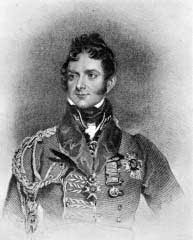
Should you ever have occasion to look up the name of Henry Torrens on Wikipedia, you may have some difficulty actually locating him. You'll find Major-General Sir Henry Torrens KCB, author of that standard textbook Field Exercise and Evolutions of the Army (1824):


Sir Henry Torrens (1779-1828)


Chances are you'll also find his grandson, the even more eminent Lieutenant General Sir Henry D'Oyley Torrens KCB KCMG, without too much trouble:


Felice Beato: Henry D'Oyley Torrens (1833-1889)


What you won't find, unless you look very hard indeed, is the entry on Henry Whitelock Torrens, son of the first, and father of the second of the military gentlemen listed above:
Henry Whitelock Torrens (20 May 1806 – 16 August 1852), son of Major-General Henry Torrens, was born on 20 May 1806. He received his B.A. at Christ Church, Oxford (where he was a president of the United Debating Society), and entered the Inner Temple. After a short service under the Foreign Office, he obtained a writership from the Court of Directors of the East India Company and arrived in India in November 1828 and held various appointments at Meerut. In 1835 he joined the Secretariat, in which he served in several departments under Sir William Hay Macnaghten. In 1839 he assisted in the editing of the Calcutta Star, a weekly paper, which became a daily paper called the Eastern Star. He was secretary (1840–1846) and a Vice-President (1843–1845) to the Asiatic Society of Bengal (now the Asiatic Society). In December 1846, he was appointed Agent to the Governor-General at Murshidabad. Here in his endeavours to improve the Nizamat administration, his relations with the Nawab Nizam and his officials became greatly strained.
He was a clever essayist as well as a journalist and scholar, and his scattered papers were deservedly collected and published at Calcutta in 1854.
Torrens died of dysentery at Calcutta while on a visit to the Governor-General on 16 August 1852 and was buried in the Lower Circular Road Cemetery.
A bit of a nobody, one might feel tempted to conclude: a lawyer and journalist, who died young, leaving behind a son and a pile of "scattered papers."

What this entry fails to mention, however, is his importance as the author of the first serious attempt at a complete English translation of the 1001 Nights from the Arabic. He is included on the page devoted to Translations of One Thousand and One Nights, however:
Henry Torrens translated the first fifty nights from Calcutta II, which were published in 1838. Having heard that Edward William Lane began his own translation, Torrens abandoned his work.


There's a bit more to it than that, however. Luckily Richard Burton, in the preface to his own complete 1885 translation of the collection, is somewhat more expansive:
At length in 1838, Mr. Henry Torrens, B.A., Irishman, lawyer ("of the Inner Temple") and Bengal Civilian, took a step in the right direction; and began to translate, "The Book of the Thousand Nights and One Night," (1 vol., 8vo, Calcutta: W. Thacker and Co.) from the Arabic of the Ægyptian (!) MS. edited by Mr. (afterwards Sir) William H. Macnaghten. The attempt, or rather the intention, was highly creditable; the copy was carefully moulded upon the model and offered the best example of the verbatim et literatim style. But the plucky author knew little of Arabic, and least of what is most wanted, the dialect of Egypt and Syria. His prose is so conscientious as to offer up spirit at the shrine of letter; and his verse, always whimsical, has at times a manner of Hibernian whoop which is comical when it should be pathetic. Lastly he printed only one volume of a series which completed would have contained nine or ten.
- Richard F. Burton, "The Translator's Foreword." A Plain and Literal Translation of the Arabian Nights Entertainments, Now Entituled The Book of the Thousand Nights and a Night, 10 vols. Benares: Kamashastra Society, 1885. vol.1: xi.
You'll note that his wikipedia entry above made no mention of Torrens' Irish antecedents. Burton's remarks about the "Hibernian whoop" in his verses underlines it rather patronisingly ("plucky" seems a rather belitting epithet to apply to a fellow author, also). The curious thing is that Burton himself was often discriminated against as an Irishman by his intensely class and caste-conscious English contemporaries. Whilst he himself was born in Torquay, both of his parents were of Irish extraction.

Anyway, whatever the rights and wrongs of the case, here are the title-pages of Torrens' two principal publications. Fortunately both are readily available online as free e-texts:


  1. Torrens, Henry. The Book of the Thousand Nights and One Night: From the Arabic of the Aegyptian Ms. as edited by Wm Hay Macnaghten, Esqr., Done into English by Henry W. Torrens. Calcutta: W. Thacker & Co. / London: W. H. Allen & Co., 1838.


  2. Hume, James, ed. A Selection from the Writings, Prose and Poetical, of the late Henry W. Torrens, Esq., B.A., Bengal Civi Service, and of the Inner Temple; with a Biographical Memoir. 2 vols. Calcutta & London: R. C. Lepage & Co., 1854.

The editor of the second of these volumes explains that:
I have taken nearly all the poetry from the volume of the Arabian Nights ... because I found selection most difficult where all appeared good. The book is out of print, or nearly so I believe, and the severest critic will not blame me for preserving what otherwise might soon have been lost, or at any rate difficult to procure.
So who's correct? Did Torrens have any poetic talent or not? Burton (of course) had a tendency to play down the merits of any possible rivals. He himself has a reputation as a most execrable versifier (unlike his fellow Nights translator, John Payne).


William Harvey: The Ifrit and the Lady (1839)


Perhaps, then, you should judge for yourselves:
Then they both gave her rings from off their hands, and she said to them, "This Ufreet carried me off secretly on the night of my marriage, and put me into a coffer, and placed the coffer in a chest, and put on the chest seven strong locks, and laid me low in the midst of the roaring sea, the ever restless in the dashing of waves; yet he does not know that when a woman desires aught, there is nothing can prevail against her, as certain poets say.
"With confidence no women grace,
Nor trust an oath that's given by them;
Passion's the source and resting place,
Of anger and joy with them;
False love they show with lying face,
But ’neath the cloak all's guile with them;
In Yoosoof's story you may trace,
Some of the treacheries rife in them;
See ye not father Adam's case?
He was driven forth by cause of them.
Certain poets too have said,
“But alas! for you, who blame me
Fix the blamed one in his fault!
Is the sin with which you shame me,
Great and grievous as you call't?
Say, I be indeed a lover,
Have I done aught greater crime
Than in all men you discover,
Even from the olden time?
Ne'er at earthly thing I'll wonder,
Whatsoe'er the marvel be,
Till on one I chance to blunder
Scaped from woman's wile scot free."
The passage above comes from the frame-story to the Nights, where the two brothers Shahryar and Shahzaman, having executed their wives for adultery, are riding out to try and discover a virtuous woman. This one, even though she was abducted on her wedding night by a seemingly all-powerful Ifrit, has still managed to cuckold him more than 500 times.


Albert Letchford: The Ifrit and the Lady (1897)


Here's Burton's 1885 version of the same passage:
When they had drawn their two rings from their hands and given them to her, she said to them, "Of a truth this Ifrit bore me off on my bride-night, and put me into a casket and set the casket in a coffer and to the coffer he affixed seven strong padlocks of steel and deposited me on the deep bottom of the sea that raves, dashing and clashing with waves; and guarded me so that I might remain chaste and honest, quotha! that none save himself might have connexion with me. But I have lain under as many of my kind as I please, and this wretched Jinni wotteth not that Destiny may not be averted nor hindered by aught, and that whatso woman willeth the same she fulfilleth however man nilleth. Even so saith one of them:—
'Rely not on women;
Trust not to their hearts,
Whose joys and whose sorrows
Are hung to their parts!
Lying love they will swear thee
Whence guile ne'er departs:
Take Yusuf for sample
'Ware sleights and 'ware smarts!
Iblis ousted Adam
(See ye not?) thro' their arts.'
And another saith:—
'Stint thy blame, man! 'Twill drive to a passion without bound;
My fault is not so heavy as fault in it hast found.
If true lover I become, then to me there cometh not
Save what happened unto many in the by-gone stound.
For wonderful is he and right worthy of our praise
Who from wiles of female wits kept him safe and kept him sound.'"


John Tenniel: The Sleeping Genie and the Lady (1865)


And here's John Payne's (1882):
So each of them took off a ring and gave it to her. And she said to them, "Know that this genie carried me off on my wedding night and laid me in a box and shut the box up in a glass chest, on which he clapped seven strong locks and sank it to the bottom of the roaring stormy sea, knowing not that nothing can hinder a woman, when she desires aught, even as says one of the poets:
I rede thee put no Faith in womankind,
Nor trust the oaths they lavish all in vain:
For on the satisfaction of their lusts
Depend alike their love and their disdain.
They proffer lying love, but perfidy
Is all indeed their garments do contain.
Take warning, then, by Joseph's history,
And how a woman sought to do him bane;
And eke thy father Adam, by their fault
To leave the groves of Paradise was fain.
Or as another says:
Out on yon! blame confirms the blamed one in his way.
My fault is not so great indeed as you would say.
If I'm in love, forsooth, my case is but the same
As that of other men before me, many a day.
For great the wonder were if any man alive
From women and their wiles escape unharmed away!"


My 1001 Nights Project: The Ifrit and his Stolen Bride (tumblr)


So what do you think? I certainly think it would be difficult to claim that Torrens's version was any worse than either of the others. On the contrary, it's much easier to follow, and seems to mean much the same thing. As for Burton's accusation that the former's translation exemplified "the verbatim et literatim style," it's surely the case that both Payne and Burton make far greater efforts to follow the verbal and syntactical oddities of the original Arabic.

No doubt it's true that Torrens gave up on his project when he heard that Edward W. Lane was engaged in a not dissimiar work - not knowing, perhaps, how sadly bowdlerised the resulting translation would turn out to be. There's a curious echo, there, of Burton's discovery, fifty years later, that John Payne was embarked on the same project of a complete and literal translation of The Thousand Nights and One Night.

Unlike Torrens, though, Burton did not choose to step aside meekly. Instead he offered Payne priority of publication, but then went on to issue his own extensively annotated version a year later. The embarrassing similarities between large parts of the two translations has led to accusations of plagiarism on Burton's part. Whether or not this is true, even Burton admitted that when a previous scholar has hit on the perfect way to express something, it would be needless pedantry to insist on phrasing it differently. Make of that what you will.

It does seem possible that Burton was so scornful of Torrens because the latter resembled him in so many ways: the 'un-English' exuberance of manner, the gift for languages ... Unlike Torrens, though, Burton was sent down from Oxford without a degree, and managed to antagonise almost all of his well-wishers both in India and England.

Torrens, by contrast, managed to work harmoniously even with the eminent but eccentric William Hay Macnaghten, whose four-volume edition of the Arabic text of the 1001 Nights - the basis for his own translation - remains a monumental and irreplaceable work.


Of course, to anyone familiar with the history of nineteenth-century India, and particularly the ill-judged 1839 invasion of Afghanistan, Macnaghten is better known as the blundering political officer who was captured and killed by the Afghans in December 1841, shortly before the disastrous retreat from Kabul - generally thought to be among the worst military disasters in British history.

Macnaghten has a cameo role in the section devoted to the Afghanistan debacle in George MacDonald Fraser's irreverent but highly readable pisstake version of imperial history Flashman (1969), which purports to be the memoirs of the bully from Tom Brown's Schooldays.


George MacDonald Fraser: Flashman (1839-42)


Interestingly enough, the city I live in, Auckland, is named after George Eden, 1st Earl of Auckland, Governor-General of India between 1836 and 1842, whose other great claim to fame is principal responsibility for the Afghanistan disaster.

My father could never walk past the toga'd statue of the great fool - originally erected in Calcutta in 1848, but donated to our city in 1969 - without shaking his fist and calling down curses upon his name.

The connections are all there, once you're ready to see them.