Saturday, November 17, 2018

Favourite Children's Authors: Alan Garner


Alan Garner (1934- )


There's an early Alan Garner story called "Feel Free" included in Susan Dickinson's anthology The Restless Ghost and Other Encounters and Experiences (1970). I read it while I was at Intermediate School, but I've never seen it collected anywhere else.

I remember it surprised me quite a bit. It was too advanced and complex to be as satisfactory to me, then, as the other stories by the likes of Joan Aiken and Leon Garfield in the same collection. There was something very intriguing about it, though.


Susan Dickinson, ed. The Restless Ghost (1970)


The story begins with a boy, Brian, who is copying a design from an old plate in a small provincial museum:
The dish stood alone in its case, a typed label on the glass: "Attic Krater, 5th Century BC, Artist Unknown. The scene depicts Charon, ferryman of the dead, conveying a soul across the river Acheron in the Underworld."
He persuades the curator to let him take it out for a moment:


Anthony Maitland: "Feel Free" illustration (c.1970)


"Tosh, look!" Brian nearly dropped the dish. On the base was a clear thumb print fired hard as the rest of the clay.
"There he is," whispered Brian.
The change from the case to the outside air had put a mist on the surface of the dish, and Brian set his own fingers against the other hand.
"Two thousand year, Tosh. That's nothing. Who was he?
"No, he'll not have a headache."
Brian stared at his own print and the fossilled clay. "Tosh," he said, 'they're the same. That thumb print and mine. What do you make of it?
Tosh, the curator, is at first disposed to scoff. Eventually he admits: "Very close, I'll allow, but see at yon line across the other feller's thumb. That's a scar. You haven't got one."

Brian is unconvinced: "But a scar's something that happens ... It's nothing to do with what you're born like. If he hadn't gashed his thumb, they'd be the same."


Later Brian meets his girlfriend Sandra for their date at the open day at the local holiday camp:
Hello! Hello! Hello! Feel free, friends! This is the Lay-Say-Far Holiday Camp, a totally new concept in Family Camping, adding a new dimension to leisure, where folk come to stay, play, make hay, or relax in the laze-away days that you find only at the Lay-Say-Fair Holiday Camp.
"Where shall we go on now?" asks Brian, after they've wandered around for a bit, and gone on most of the rides:
"There's the Tunnel of Love, if you're feeling romantic," said Sandra.
"You never know till you try, do you?" said Brian.
The tunnel is predictably cheesy, but a little macabre as well:
Beyond the gate was a grotto of plaster stalactites and stalagmites, and the channel rushed among them to to a black tunnel.
"Queer green light there, isn't it?" said Sandra. "Ever so eerie."
The heel of Sandra's shoe gets caught as she tries to climb in the boat, and he is unable to free it in time for her to join him:
She was swinging away from him, a tiny figure lost among stalactites. He stood, looking, looking and slowly lifted his hand off the nail that had worked loose at the edge of the stern. He had not felt its sharpness, but now the gash throbbed across the ball of his thumb. The boat danced towards the tunnel.


I guess what I like, still, so much about this story is the way in which it manages to introduce all the characteristic themes Alan Garner is known for in such a short compass of time.

There's the idea of artefacts carrying baggage with them from the past (like the patterned plates in The Owl Service, or - even more so - the stone axe in Red Shift). There's also the (implicit) comparison between a dignified, layered past of cottage industries and individual destinies and the mass-produced, plastic present.

There's something uncomfortably prescient in the passage where Brian and Sandra sit together in the Willow Pattern Garden:
"No. Look, said Brian, and leant backwards to gather a handful of earth from a rockery flower bed. "Soil isn't muck, it's ... well, I'll be ... Sandra? This here soil's plastic."
Smooth, clean granules rolled between his fingers.
"The whole blooming lot's plastic - grass, flowers, and all!"
"Now that's what I call sensible. It helps to keep the costs down," said Sandra. "And it doesn't kill bees."
As it turns out, there are no bees to kill. "They were each mounted on a quivering hair spring, the buzzer plugged in to a time switch."

In someone else's hands, this could be quite a heavy-handed story. But Garner leaves an air of mystery about almost every aspect of it. Does the fact that Brian has now acquired a scar to match the one left on the ancient plate mean that he is going to join its owner as his own boat moves towards the dark mouth of the tunnel? There's certainly something a bit ominous about the fact that the pattern of the plate shows Charon the ferryman carrying souls to the land of the dead.

And then there's the title, "Feel Free." The point appears to be that while Brian may feel free, his actions are somehow predetermined by an inexorable, inescapable past. For all the wondrous patina on the artefacts in the old museum, they can exert an uncomfortable, even (possibly) an unhealthy influence on the present.

Brian and the other character's use of a few provincial turns of phrase also seemed pretty innovative to me when I read it first. Garner's characters move downwards in social level as his work progresses. Colin and Susan in his first two books talk standard English to the other characters' Cheshire dialect. The children in Elidor are closer to the working classes, but they still use something resembling received pronunciation.

Class becomes an issue for the first time in The Owl Service, but even there it's a more standard Middle-Class English / Working-Class Welsh contrast. After that, though, Garner's characters mostly speak in dialect, though there are always a few toffs around in the stories - reflecting their author's own divided identity, I guess.

The story, like the old Greek plate at its centre, is a small masterpiece: better than one has any right to expect in such a context. The museum, its curator, Brian himself, are sketched deftly, in a few strokes. Only the fun fair descends to caricature (Sandra, too, I fear: a typically unimaginative female who could have walked straight out of any story from the Angry Young Man era).

The focus really isn't on Sandra, though, it's on Brian: Brian whose sense of rightness and perfection in design has made him blind to the charms of the present, and predisposed him to flirtations with the dark past:
"Have you ever hidden anything to chance it being found again years and years later - perhaps long after you're dead?
"No," said Sandra.
"I have," said Brian. "I was a great one for filling screw-top bottles with junk and then burying them. I put notes inside, and pieces out of the newspaper. You're talking to someone you'll never meet, never know: but if they find the bottle they'll know you. There's bits of you in the bottle, waiting all this time, see, in the dark and as soon as the bottle's opened - time's nothing - and - and -"
"Eh up," said Sandra, "people are looking. You do get some ideas, Brian Walton!
It's not hard to see the analogies here between Brian and his creator: Brian Walton / Alan Garner. Writers, too, bury things in the dark, hide them inside the containers they make: "You're talking to someone you'll never meet, never know: but if they find the bottle they'll know you."


Terracotta Perfume Flask: Charon (c.340 BC)


•


Susan Dickinson, ed.: The Restless Ghost: Acknowledgements


That may be a lot of significance to lay on one short, uncollected story - dating from 1968, if we can trust the acknowledgments section above - but if anything is apparent in Garner's work in general, it's that he expects each page, each line, each word even to do a great deal of work. It's no accident that his books tend to be short. The weight of significance each one of then bears is disproportionate to the number of pages: in that he has far more in common with a poet than a more conventional prose writer.

His publications to date fall into several discrete groups. Before continuing any of these trains of thought, I think I'd better outline just what we're talking about. First of all, both chronologically and in popularity, there are those books which - despite their increasing subtlety and complexity - still have to be thought of as primarily for children:


    Alan Garner: The Weirdstone of Brisingamen (1960)


  1. The Weirdstone of Brisingamen: A Tale of Alderley. 1960. London: William Collins Sons & Co. Ltd., 1990.


  2. Alan Garner: The Moon of Gomrath (1963)


  3. The Moon of Gomrath. 1963. An Armada Lion. London: Collins, 1974.


  4. Alan Garner: Elidor (1967)


  5. Elidor. Illustrated by Charles Keeping. 1965. London: William Collins Sons & Co. Ltd., 1971.


  6. Alan Garner: The Owl Service (1967)


  7. The Owl Service. 1967. An Armada Lion. London: Collins, 1974.


  8. Alan Garner: Red Shift (1973)


  9. Red Shift. 1973. London: Collins, 1973.


  10. Alan Garner: The Stone Book Quartet (1976-78)


  11. The Stone Book. The Stone Book Quartet. 1. 1976. Illustrated by Michael Foreman. Fontana Lions. London: Collins, 1979.

  12. Tom Fobble’s Day. The Stone Book Quartet, 2. 1977. Illustrated by Michael Foreman. Fontana Lions. London: Collins, 1979.

  13. Granny Reardun. The Stone Book Quartet, 3. 1977. Illustrated by Michael Foreman. Fontana Lions. London: Collins, 1979.

  14. The Aimer Gate. The Stone Book Quartet, 4. 1978. Illustrated by Michael Foreman. Fontana Lions. London: Collins, 1979.

These six books (I think one can describe the Stone Book Quartet as a single work, despite its quite separate sections) range from the madcap magical adventurousness of The Weirdstone of Brisingamen to the terrifying intensities of The Owl Service with no diminution of quality at any point. Garner is one of those rare writers who is content only with masterpieces, and who constantly racks up the pressure with each new work.

Alongside this very original sequence of imaginative works, though, there is a very different set of publications. I don't have all of these folktale anthologies and retellings, but this is most of them. They are quite exceptionally good of their kind, I would say, and I speak as one who has read more than his fair share of such books. The figure of the trickster appears to appeal particularly to Garner, and he writes of him brilliantly and (at times) quite disconcertingly:


Alan Garner: A Book of Goblins (1969)


  1. Garner, Alan, ed. A Book of Goblins. Illustrated by Krystyna Turska. 1969. Puffin Books. Harmondsworth: Penguin, 1972.

  2. Garner, Alan, ed. The Guizer: A Book of Fools. 1975. Fontana Lions. London: Collins, 1980.

  3. Alan Garner's Book of British Fairy Tales. Illustrated by Derek Collard. 1984. London: Collins, 1988.

  4. Garner, Alan, ed. A Bag of Moonshine. 1986. Lions. London: HarperCollins, 1992.

  5. Collected Folk Tales. London: HarperCollins Children's Books, 2011.


Alan Garner: Collected Folk Tales (2011)


Which brings us to his novels for grown-ups. Or at least I suppose that's who they're for. They require such careful, attentive reading, that I guess they're for anyone prepared to invest in them fully.

The first, in particular, is another masterpiece. And while one can recognise many elements of the earlier Garner of the 'Weirdstone' books: the obsession with Alderley Edge, for instance, Strandloper is really sui generis as a novel. It is, among other things, the work of someone determined to reinvent himself wholly for each new project - a pretty terrifying prospect for other, more workaday writers.


    Alan Garner: Strandloper (1996)


  1. Strandloper. 1996. London: The Harvill Press, 1997.


  2. Alan Garner: Thursbitch (2003)


  3. Thursbitch. 2003. London: Vintage, 2004.


  4. Alan Garner: Boneland (2012)


  5. Boneland. Fourth Estate. London: HarperCollins Publishers, 2012.


The last of these is the oddest and - to my mind - probably the least successful. It attempts to close off the 'Weirdstone' trilogy, fifty years after it was begun. And yet it's hard to see exactly who it was written for. Certainly not for the children who enjoyed those adventurous encounters with magicians and dwarves.

Neither is it really for admirers of his previous two novels, though it shares many features with them: allusiveness in place of direct utterance, absence of affect where one would most expect it, and intricate pattern-making of an almost Celtic, Book of Kells-like, nature.

Which brings us to the last set of books. His recent memoir and his book of essays:


Alan Garner: The Voice that Thunders (1997)


    Non-fiction:

  1. The Voice That Thunders: Essays and Lectures. London: The Harvill Press, 1997.

  2. Where Shall We Run To? A Memoir. London: Fourth Estate, 2018.


Alan Garner: Where Shall We Run To? A Memoir (2018)


The picture these two books paint of their author is not an entirely positive one. The memoir concerns only his early childhood, before he went off to Grammar School, and contains little more compromising than the revelation that his 'scientific' curiosity about the effects of dock-leaves on nettle stings inspired him to push one of his friends, Harold, into a field of them at one point:
I'd not heard a boy scream before. It went on. It didn't stop. It wasn't Harold. I ran. I ran all the way home, up the stairs, fell on my bed, and yelled and yelled, still hearing the scream in my head, and cried and cried; but I hadn't got any dock-leaves.
The next day, Harold called me a daft beggar and a mucky pup.
The book is constructed in a curiously spiral manner. It concludes with a few late anecdotes (one about Harold), but the narrative proper ends with the author sitting the eleven-plus examination in Manchester. We've already heard the results of this at the end of chapter two, shortly after the nettling incident, however:
A letter came for me in the post some time after, and my mother was waiting for me at the end of School Lane when lessons were over. She told me I'd won a scholarship.
That evening, the gang were playing round the sand patch. It was Ticky-on-Wood. Harold's mother came out of the house. Her face was different. 'Well, Alan,' she said, 'you won't want to speak to us any more.'
I didn't understand. I felt something go and not come back.
In a sense, it's clear that everything Alan Garner has written since - all the novels, the essays, even the retellings of folktales - has been one long attempt to understand this moment when something went and did not come back.


•


Sunday, November 11, 2018

11th Hour of the 11th Day of the 11th Month


Perhaps all wars require a mythic dimension to put alongside their otherwise irredeemable horror and brutality. The abduction of Helen by Paris adds a romantic sheen to what may actually have been a protracted struggle between the Achaean and Hittite Great Kings over trade access to Asia Minor.

In Homer's version of the Trojan War, of course, the irony of the whole thing lies in the fact that Helen is back as reigning Queen of Sparta by the beginning of the Odyssey, and is clearly inclined to see the whole thing as a youthful bagatelle. There's a slight edge to it all still, though.

In her version, she was the only one to recognise Odysseus when he entered the besieged city disguised as a beggar, and aided him in his mission, having (by then) repented her past indiscretions:
... since my heart was already longing for home, and I sighed at the blindness Aphrodite had dealt me, drawing me there from my own dear country, abandoning daughter and bridal chamber, and a husband lacking neither in wisdom nor looks.
Her husband Menelaus's account is, to say the least, a little different. He sees her as, if not an active collaborator with the Trojans, at any rate somewhat ambivalent in her support of the Greeks:
You circled our hollow hiding-place, striking the surface, calling out the names of the Danaan captains, in the very voices of each of the Argives’ wives. Diomedes, Tydeus’ son, and I, and Odysseus were there among them, hearing you call, and Diomedes and I were ready to answer within, and leap out, but Odysseus restrained us, despite our eagerness. [Odyssey 4, 220-89]
The Allied soldiers who fought at Gallipoli, just across the straits from Hissarlik, the probable site of ancient Troy, were by no means unaware of these parallels. Their classically trained young officers were, indeed, preoccupied by the subject - possibly to the exclusion of other, more vital, concerns.


Jean Giraudoux: La Guerre de Troie n'aura pas lieu
[The Trojan War will not take place] (1935)


Take, for instance, Patrick Shaw-Stewart's famous poem "Achilles in the Trench":
I saw a man this morning
Who did not wish to die;
I ask, and cannot answer,
if otherwise wish I.

Fair broke the day this morning
Upon the Dardanelles:
The breeze blew soft, the morn's cheeks
Were cold as cold sea-shells.

But other shells are waiting
Across the Aegean Sea;
Shrapnel and high explosives,
Shells and hells for me.

Oh Hell of ships and cities,
Hell of men like me,
Fatal second Helen,
Why must I follow thee?

Achilles came to Troyland
And I to Chersonese;
He turned from wrath to battle,
And I from three days' peace.

Was it so hard, Achilles,
So very hard to die?
Thou knowest, and I know not;
So much the happier am I.

I will go back this morning
From Imbros o'er the sea.
Stand in the trench, Achilles,
Flame-capped, and shout for me.
The poem is valorised not only by those remarkable last two lines, but also by its author's own death, on active service, in 1917. I suppose what it's always recalled to me, though, rather than all of Achilles' dazzling deeds in the Iliad, are the last words we hear in his own voice, when he encounters Odysseus on his own journey to the Underworld:
Odysseus, don’t try to reconcile me to my dying. I’d rather serve as another man’s labourer, as a poor peasant without land, and be alive on Earth, than be lord of all the lifeless dead. [Odyssey 11, 465-540]


Kurz & Allison: First Battle of Bull Run (1861)


The American Civil War famously began in Wilmer McLean's front yard and finished in his back parlour.

McLean, a wholesale grocer, was so appalled by the experience of having his farm fought over in the first major engagement between the Union and Confederate armies, that he relocated his family in 1863. Unfortunately, the place he chose, an obscure little hamlet called Appomattox Courthouse, turned out to be the location of Robert E. Lee's surrender to Ulysses S. Grant in 1865.


That's what I mean by a mythic dimension. There's no real meaning in this strange coincidence, but it seems to betoken some kind of cosmic symmetry in things: a design behind all the relentless bloodshed human beings seem determined to mete out upon one another.


Wilfred Owen: Selected Poems (2018)


Another, of course, is the awful fatality of Wilfred Owen's life and death. He died, on the 4th of November 1918 - almost exactly one hundred years ago - in an assault on the Sambre–Oise Canal. However, as the Folio Society are at pains to remind us in the advertisement for their sumptuous new illustrated edition of his selected poems:
... his parents received the telegram announcing his death on 11 November itself, just as the church bells rang out in Shrewsbury to mark the end of the Great War.
There lies the apparent design. The poet who wrote in the draft preface to his as yet unpublished poems:
This book is not about heroes. English Poetry is not yet fit to speak
of them. Nor is it about deeds or lands, nor anything about glory, honour,
dominion or power,
Except War.
Above all, this book is not concerned with Poetry.
The subject of it is War, and the pity of War.
The Poetry is in the pity.
could somehow not be permitted to survive the war. Like Abraham Lincoln, or Achilles himself, he had to fall victim to it in order to achieve his full status as a sacrificial victim.

"He died that we may live." That's the kind of unctuous platitude that tends to come out on these occasions. And yet, it's hard to avoid a sense of strangeness about the whole thing, about the idea that the author of "Anthem for Doomed Youth" could not himself be allowed to outlive the war that turned him into perhaps the greatest of all war poet since Homer.


Mary Renault: The King Must Die (1958)


Mary Renault perhaps puts it best, in her novel The King Must Die (about the myth of Theseus), where she tries to explain the Ancient Greek concept of moira as:
The finished shape of our fate, the line drawn round it. It is the task the gods allot us, and the share of glory they allow; the limits we must not pass; and our appointed end. Moira is all these things.
"The king must go willingly, or he is no king." Whether it is Abraham Lincoln going to Ford's Theatre to show himself to the public one last time, Wilfred Owen refusing to accept non-active service away from the Front Line, or Achilles weeping with Priam over the body of Hector, there is something superhuman about all these noble, almost transcendent gestures.

The armistice itself is replete with legends: many of them clustering around the strange symmetry of "the eleventh hour of the eleventh day of the eleventh month."


In the cult British TV Sci-fi classic Sapphire and Steel, for instance (pictured at the head of this post), the storyline called "The Railway Station" concerns an out-of-the-way deserted railway platform haunted by a First World War soldier.

The precise nature of his grievance, and the reason he's been able to gather so many other disgruntled souls around him, hinges on the armistice: specifically, on the equation he keeps on drawing on the windows of the building:
11 / 11 / 11 / 11 = 18
It turns out that he was killed eleven minutes into that eleventh hour, and was thus an altogether unnecessary sacrifice to the gods of war.


Thomas Keneally: Gossip from the Forest (1975)


An even more complex set of ironies is explored in Thomas Keneally's 1975 novel Gossip from the Forest (subsequently made into a powerful, atmospheric film), about the German deputation sent to negotiate the surrender, and the subsequent murder by a right-wing fanatic of their leader, politician Matthias Erzberger, whilst walking in the Black forest a few years later.

From the Forest of Compiègne to the Black Forest, in fact.


Lady Ottoline Morrell: Siegfried Sassoon and Robert Graves (1920)


I don't mind admitting, though, that my favourite of all of the poetic moments associated with the armistice is the one recorded in Siegfried Sassoon's great poem "Everyone Sang":
Everyone suddenly burst out singing;
And I was filled with such delight
As prisoned birds must find in freedom,
Winging wildly across the white
Orchards and dark-green fields; on - on - and out of sight.

Everyone's voice was suddenly lifted;
And beauty came like the setting sun:
My heart was shaken with tears; and horror
Drifted away ... O, but Everyone
Was a bird; and the song was wordless; the singing will never be done.

Sassoon survived. He went on to write many (mostly disappointing) further volumes of poems, but also a wonderful series of war memoirs and autobiographies. He got married, had a son, lived a long life. So let's not get too beguiled by the beautiful symmetries and high-mindedness of these seductive legends:
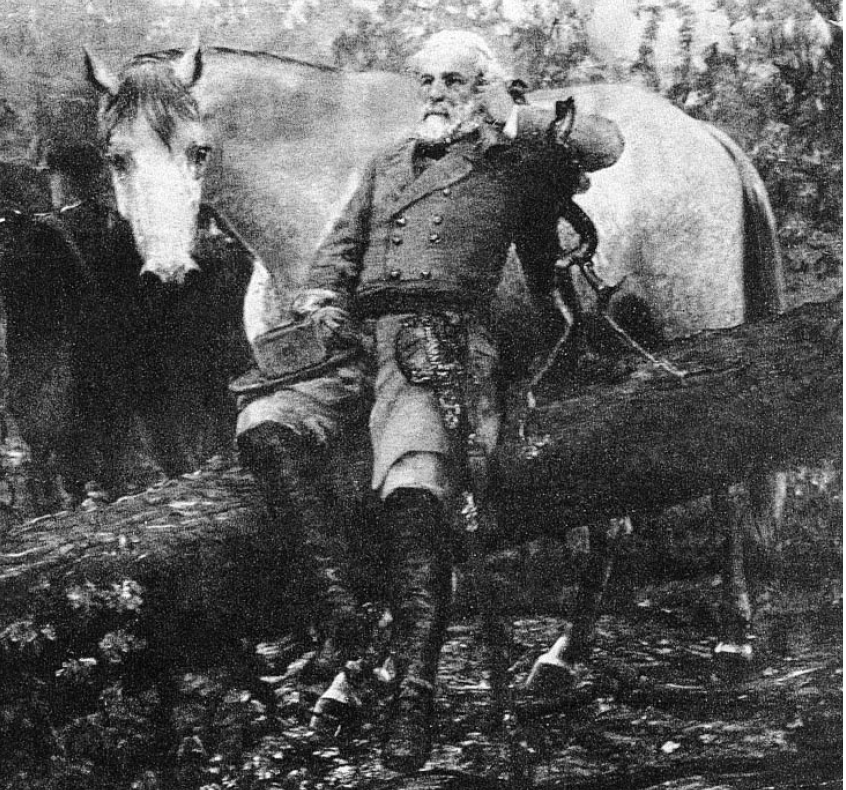
It is well, as Robert E. Lee said, that war is so terrible. We should grow too fond of it.


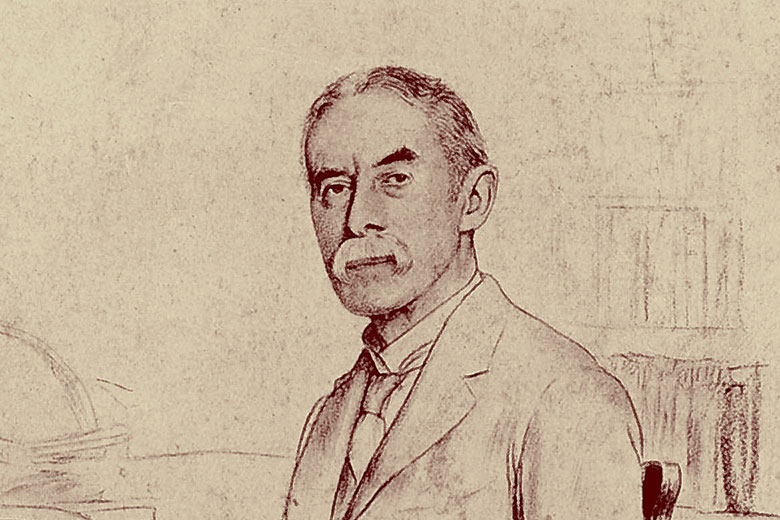
Or, as the somewhat more mordant A. E. Housman said in his "Epitaph on an Army of Mercenaries":
These, in the day when heaven was falling,
The hour when earth's foundations fled,
Followed their mercenary calling,
And took their wages, and are dead.

Their shoulders held the sky suspended;
They stood, and earth's foundations stay;
What God abandoned, these defended,
And saved the sum of things for pay.


A. E. Housman (1859-1936)


Sunday, November 04, 2018

Classic Ghost Story Writers: Colin Wilson


Colin Wilson (1957)


I used to feel a bit ashamed of reading books by Colin Wilson. They definitely fall into the 'guilty pleasures' category. As you can see from the list below, I collected his fiction fairly assiduously up until the end of the 1970s, but then let the habit lapse.

I do have most of them, though - with the exception of the late 'Spider World' series (1987-2002), and a few others such as The Janus Murder Case (1984), The Personality Surgeon (1985), and the posthumous Lulu: an unfinished novel (2017).

The first one I encountered - and it's still my favourite - was The Mind Parasites (along with, to a slightly lesser extent, its successors The Return of the Lloigor and The Philosopher's Stone).

I'm not quite sure why I liked it so much at the time. True, it was full of bookish information, and ended with one of those characteristic Campbell-era Sci-fi Man-plus resolutions, but there was an unmistakable zest about it.


Colin Wilson: The Mind Parasites (1967)


    Fiction:

  1. Ritual in the Dark. 1960. Panther Books. Frogmore, St Albans, Herts: Granada Publishing Limited, 1976.

  2. Adrift in Soho. 1961. London: Pan Books Ltd., 1964.

  3. The World of Violence. 1963. London: Pan Books Ltd., 1965.

  4. Man Without a Shadow. 1963. London: Pan Books Ltd., 1966.

  5. Necessary Doubt. 1964. London: Panther Books Ltd., 1966.

  6. The Glass Cage: An Unconventional Detective Story. 1966. New York: Bantam Books, 1973.

  7. The Mind Parasites. 1967. Berkeley, California: Oneiric Press, 1983.

  8. 'The Return of the Lloigor.' In Tales of the Cthulhu Mythos. Ed. August Derleth. 1969. London: Grafton, 1988. 439-501.

  9. The Philosopher's Stone. 1969. Panther Books. Frogmore, St Albans, Herts: Granada Publishing Limited, 1974.

  10. The God of the Labyrinth. 1970. Panther Books. Frogmore, St Albans, Herts: Granada Publishing Limited, 1977.

  11. The Killer. 1970. Panther Books. Frogmore, St Albans, Herts: Granada Publishing Limited, 1977.

  12. The Black Room. 1971. London: Sphere Books Ltd., 1977.

  13. The Schoolgirl Murder Case. 1974. Panther Books. Frogmore, St Albans, Herts: Granada Publishing Limited, 1977.

  14. The Space Vampires. Granada Publishing Limited. Frogmore, St Albans, Hertfordshire: Hart-Davis, MacGibbon Ltd., 1976.

  15. 'A Novelization of Events in the Life and Death of Grigori Efimovich Rasputin.' In Tales of the Uncanny. New York: The Reader’s Digest Association, Inc., 1983. 487-606.


Colin Wilson: The Philosopher's Stone (1969)


Already, though, I could see some of the features of Wilsonian fiction in general: the weird lack of affect, of any attempt to convey an atmosphere of reality - an atmosphere of anything, really, except people reading books and meeting other people to plan meeting more people to talk about the books and the ideas in them.

One might charitably call it Shavian, after one of his greatest influences, George Bernard Shaw. He too, eschews stylistic and tonal effects in favour of raw ratiocination.


Colin Wilson: Bernard Shaw: A Reassessment (1969)


The thing about Shaw, though, is that he makes difficult ideas sound simple. He has a lot of sensible things to say about a great many features of the world around him. Colin Wilson really only has one idea, dished up again and again in slightly different forms.

That idea is (in its simplest form) that we don't use our brains to the uttermost - that if there were some way in which we could protract and/or artificially induce what psychologist Abraham Maslow called "peak experiences," then mankind could be transformed.

Now whether or not this is a good idea is beside the point. Maslow denied the possibility that the euphoria of peak experiences could be brought on in such a way, but Wilson was convinced that he was wrong. Most of his - very extensive - work on the occult was concerned with whether or not certain mystics and clairvoyants had succeeded in doing so.

His interest in H. P. Lovecraft was mainly to denounce him as an enemy of this "positive" vision of life. That is, until he started writing Lovecraftian fiction himself, after which he used the mechanics of the Cthulhu Mythos to promote the idea of - guess what? - peak experiences, only by now he'd started calling them "faculty x."


Wilson was an appallingly prolific writer. There were, no doubt, many reasons for this: the need to make a living on book advances must have constituted a considerable temptation to pitch an endless series of books to his publishers (many of them thinly disguised re-hashes of what had gone before).


Colin Wilson: The Outsider (1956)


In critical terms, however, this is what doomed him to the literary fringes. The reviewers who'd hailed his first work The Outsider (1956) as an amazing piece of cultural insight, written by a 24-year-old working-class genius, were somewhat disconcerted to see Religion and the Rebel come thumping down the book-chute the very next year. They began to suspect they'd been had.

In reality, of course, The Outsider was not nearly as original and ground-breaking as they'd thought. It's a sign of the shallowness of British book culture of the time that names such as Dostoyevsky and Hamsun and Rilke, mentioned by a man who'd clearly actually read them, seemed unduly impressive to a great many of these half-educated bigmouths. But then, its successors weren't nearly as bad as they claimed either.

Wilson's first six books, known collectively as "The Outsider Cycle": Religion and the Rebel (1957), The Age of Defeat (1959), The Strength to Dream (1962), Origins of the Sexual Impulse (1963), Beyond the Outsider (1965) and the summary volume Introduction to the New Existentialism (1966) may sound a bit monotonous at times, but they did introduce readers to one of his most considerable virtues: the ability to summarize other people's books and ideas clearly and interestingly - albeit at great length.

You may see this as a journalistic rather than a strictly writerly skill - but it does explain why even Wilson's more reluctant fans (such as myself) are prepared to lend shelf room to so many of his tomes.

Speaking personally, I could give a shit about 'faculty x'. None of the stuff he says about it seems to me to make it sound more than an agreeable fairy tale. He always cranks round to it sooner or later, though - except, perhaps, in some of his later, more unabashedly commercial, compilations, such as the 1991 Mammoth Book of the Supernatural, 'edited' by his son Damon Wilson, who also co-wrote a number of these late works. That particular tome, despite its considerable size, didn't even make it to the (admittedly rather flawed) listings on Wikpedia's Colin Wilson Bibliography page).


Colin Wilson: The Occult: A History (1971)


His bestselling book The Occult (1971) and its sequels Mysteries (1978) and Beyond the Occult (1988), as well the host of others on telemetry, past lives, poltergeists, After-death experiences, etc. etc. consist mainly of retellings of classic ghost stories and other strange happenings. That's why they're so very entertaining to read.


If you've tried the experiment of going from Wilson's version to the actual published work it was based on (as I have in the case of T. C. Lethbridge), you find just how grossly he simplifies, and how blatantly he bends their insights to fit in with his vision of a 'faculty x' dominated universe. This is bad.


Catherine Crowe: The Night-Side of Nature (1848)


On the other hand, however, I would probably never have encountered T. C. Lethbridge, or Catherine Crowe, or Atlantis theorist Rand Flem-Ath, or a host of other fascinating people and writers without the nudge given me by Colin Wilson's many, many works of summary and synthesis. It may not make him a great mind, but it certainly makes him a benefactor of a sort.


Harry Ritchie: Success Stories (1988)


Of course, there will always be mockers and scoffers who see Colin Wilson as a bit of a fraud or even (what's worse) a joke. If you'd like to read the case for the prosecution, I do recommend the very amusing chapter on Wilson and his acolytes (principally novelist Bill Hopkins and pop philosopher Stuart Holroyd) in Harry Ritchie's 1988 book Success Stories: Literature and the Media in England, 1950-1959 (conveniently summarised in this 2006 article):
[When he] handed his journals over to the Daily Mail [in December 1956] ... Wilson's private thoughts made for juicy copy. "The day must come when I am hailed as a major prophet," was one quote. "I must live on, longer than anyone else has ever lived ... to be eventually Plato's ideal sage and king ..."
Harry Ritchie is okay in my book. I met him once in a pub, and he insisted on shaking me by the hand when he discovered that I was the only other human being he'd ever met who'd actually heard of, let along read Kingsley Amis's first book of poems Bright November (1947). I'm not sure if I dared to admit to him that I actually had a xeroxed copy of the book shelved with all my other Amis-iana at home in New Zealand ...

Is Ritchie right about Wilson? Objectively, I fear he may well be. But that doesn't really account for the fact that I've had so much pleasure reading about obscure supernatural events in the endless pages of Wilson's stream-of-consciousness reading-notebooks-in-the-form-of-individually-titled-volumes. As one of G. K. Chesterton's characters once remarked (in his first novel The Napoleon of Notting Hill):
Next to authentic goodness in a book ... we desire a rich badness.
Wilson may be, in many ways, a bad writer, but it is a rich badness - and, really, who, even (I was about to write 'especially') among geniuses, isn't a bad writer at times?

So here it is, then, in all its glory, my own private library of Colin Wilsoniana. You'll note that it even includes a few of his many books on murder and serial killers, but that aspect of his interests I don't share at all. It's the occult and paranormal investigation stuff that really fascinates me:


•


A Colin Wilson library

Colin Henry Wilson
(1931-2013)

    Non-fiction:

  1. The Outsider. 1956. Pan Piper. London: Pan Books Ltd., 1963.

  2. Religion and the Rebel. London: Victor Gollancz Ltd., 1957.

  3. [with Patricia Pitman]: Encyclopedia of Murder. 1961. London: Pan Books Ltd., 1964.

  4. The Strength to Dream: Literature and the Imagination. 1962. Abacus. London: Sphere Books Ltd., 1982.

  5. Origins of the Sexual Impulse. 1963. London: Panther Books Ltd., 1966.

  6. Rasputin and the Fall of the Romanovs. 1964. Panther Books. Frogmore, St Albans, Herts: Granada Publishing Limited, 1977.

  7. Colin Wilson On Music (Brandy of the Damned). 1964. London: Pan Books Ltd., 1967.

  8. Beyond the Outsider. 1965. London: Pan Books Ltd., 1966.

  9. Voyage to a Beginning: A Preliminary Autobiography. Introduction by Brocard Sewell. London: Cecil and Amelia Woolf, 1969.

  10. The Occult: A History. 1971. New York: Vintage Books, 1973.

  11. Order of Assassins: The Psychology of Murder. 1972. Panther Books. Frogmore, St Albans, Herts: Granada Publishing Limited, 1975.

  12. Strange Powers. 1973. London: Abacus, 1975.

  13. Tree by Tolkien. Santa Barbara, CA: Capra Press, 1974.

  14. Mysteries: An Investigation into the Occult, the Paranormal and the Supernatural. 1978. London: Granada Publishing, 1979.

  15. Starseekers. 1980. London: Granada Books, 1982

  16. Poltergeist! A Study in Destructive Haunting. London: New English Library, 1981.

  17. The Psychic Detectives: The Story of Psychometry and Paranormal Crime Detection. London & Sydney: Pan Books, 1984.

  18. Afterlife: An Investigation of the Evidence for Life after Death. London: Harrap, 1985.

  19. Beyond the Occult. London: Guild Publishing, 1988.

  20. The Mammoth Book of the Supernatural. Ed. Damon Wilson. London: Robinson Publishing, 1991.

  21. [with Damon Wilson]: World Famous Strange Tales & Weird Mysteries. London: Magpie Books Ltd., 1992.

  22. [with Damon Wilson & Rowan Wilson]: World Famous Scandals. London: Magpie Books Ltd., 1992.

  23. From Atlantis to the Sphinx. London: Virgin Books, 1996.

  24. Ghost Sightings. Strange But True. Sydney: The Book Company, 1997.

  25. [with Rand Flem-Ath]: The Atlantis Blueprint. 2000. London: Warner Books, 2001.


•


Colin Wilson (2006)


Monday, October 29, 2018

The Peripeteia of Frances Yates


Frances Yates: The Art of Memory (1966)


And what, pray tell, does 'peripeteia' mean when it's at home?
a sudden reversal of fortune or change in circumstances, especially in reference to fictional narrative
is the best definition the online dictionary can provide.

I guess, in the case of Frances Yates, it refers to her transformation from an immensely learned but fairly dry-as-dust scholar of the intellectual life of the sixteenth and seventeenth century in Europe (with particular reference to the flourishing of hermetic and magical discourses in the allegedly proto-scientific late Renaissance) into a kind of pop culture guru: the High Priestess of the more respectable side of New Age Occultism.


Dame Frances Amelia Yates (1899-1981)


Southsea, Portsmouth


Her earlier books, on John Florio, the first translator of Montaigne into English (1934); Shakespeare (Love's Labour's Lost, 1936), and such apparently recondite subjects as The French Academies of the Sixteenth Century (1947) and The Valois Tapestries (1959), gave few signs of what was to come.

Reviewers were cautious about some of her 'wilder' conjectures, but for the most part she appeared just another habitué of Aby Warburg's superb library, transferred to England to avoid Nazi repression in 1933, and (as the Warburg Institute), affiliated with the University of London in 1944.


  1. John Florio: The Life of an Italian in Shakespeare's England. 1934. Cambridge: Cambridge University Press, 2011.

  2. A Study of Love's Labour's Lost. Cambridge: Cambridge University Press, 1936.

  3. The French Academies of the Sixteenth Century. 1947. London: Routledge, 1989

  4. The Valois Tapestries. 1959. London: Routledge, 2010.


The sea-change came with her next two publications: the double-whammy of Giordano Bruno and the Hermetic Tradition (1964) and The Art of Memory (1966). Wow! Talk about time, place and opportunity all coming together.

It was the age of The Morning of the Magicians (UK, translated as 'The Dawn of Magic': 1963 / US: 1964), Louis Pauwels' and Jacques Bergier's 1960 bestseller about the wilder side of twentieth century occultism. It all sounds familiar enough nowadays, but at the time most people had never even heard of the 'Vril Society' or the 'Thule Spceity" - let alone their philosophical connections with Nazism.

Le Matin des magiciens mixed up information about "conspiracy theories, ancient prophecies, alchemical transmutation, a giant race that once ruled the Earth, and the Nazca Lines" into what (in retrospect) seems a kind of blueprint for New Age nuttiness generally. Some of it may actually have been true, mind you.

It's not, I hasten to say, that Frances Yates's serious study of the memory systems of Ramon Lull and Giordano Bruno, and of the Renaissance Hermetic tradition generally had anything in common intellectually with Pauwels and Bergier's rather formless compendium of mid-twentieth century bugaboos and conspiracy theories, but it's impossible to deny that the same readers were attracted to both.

The Art of Memory in particular, outmoded though it may be in some few particulars fifty years after its publication, remains one of the most exciting books of intellectual history I've ever read. Its devotees are many, and the number of memory system addicts it has spawned must be many (even TV mentalist Derren Brown has claimed to practise its precepts).


  1. Giordano Bruno and the Hermetic Tradition. 1964. London: Routledge & Kegan Paul / Chicago: University Of Chicago Press, 1982.

  2. The Art of Memory. 1966. A Peregrine Book. Harmondsworth: Penguin, 1978.


All of which brings me to the second meaning of peripeteia in my title above.

I wish I could date it precisely, but it must have been sometime in the mid-1980s that I was browsing through Anah Dunsheath's Rare Books on High Street, when I stumbled across a little pile of books shoved to one side of the entrance to her shop.

They were, in fact, four. As well as the two books mentioned directly above, there were also:


  1. Frances Yates. Lull and Bruno. Collected Essays 1 (of 3). London: Routledge & Kegan Paul, 1982.

  2. Scott, Walter, ed. & trans. Hermetica: The Ancient Greek and Latin Writings which Contain Religious or Philosophic Teachings Ascribed to Hermes Trismegistus. Vol. 1: Introduction / Texts and Translation. 4 vols. 1924. Boulder: Hermes House, 1982.


Hermetica, vol. 1 (1982)


All in all, it looked as if some budding Occultist had bought a bunch of exciting looking books about all sorts of esoteric matters, and had either found them too boring and abstruse for their taste, or else found a more desperate need for ready cash. Reader, I bought them.

Bought them and took them home with me and immediately started in on The Art of Memory and, really, nothing has been the same for me ever since. It was just so strange and fascinating: it gave an entirely new angle on classical antiquity, on figures as well known as Simonides and Cicero, but then - in the later chapters - it completely overturned any notions I'd had that Giordano Bruno had been a martyr to science, or that any number of my Renaissance heroes had been devoted to "reason" in any modern sense of the term.

It was, I must confess, a long time before I read the first part of her diptych, Giordano Bruno and the Hermetic Tradition, which seemed to me then (it doesn't now) a bit anticlimactic after the highs of The Art of Memory. Nor did I get very far with the rather boring translation of the Hermetica. The book of essays, Lull and Bruno, was very good value indeed, though, and offered a whole series of new perspectives on this matter of the Hermetic tradition.

There is a certain amount about Ramon Lull in The Art of Memory, but the essays collected here gave a glimpse of her mind at work: her painstaking way of collecting evidence, venturing conjectures, and building on them to make immensely pleasing - if not always entirely convincing - wholes.

Anyone who's at all familiar with my own fiction (a somewhat select group, admittedly) will have observed the pervasive Yatesian influence. It's particularly strong in my first two novels, Nights with Giordano Bruno (the title is a bit of a giveaway), and The Imaginary Museum of Atlantis (which lent its name to this blog), but also in the novella Trouble in Mind (2005).

After that the fever subsided a bit, but Frances Yates still is my go-to gal when it comes to any kind of abstruse or coded information. Her work has its ups and downs, definitely, but basically I consider her both completely intellectually honest and greatly gifted creatively - the models she came up so regularly with in her works of intellectual history have a huge mythopoetic force to them.

Her later work is more of a mixed bag. It was assured of a much wider sale than most historians of ideas enjoy, which led to jealousy from less fortunate colleagues. It also, at times, advanced some rather dubious conjectures on such subjects as the underlying design of Shakespeare's Globe theatre, and the precise influences at work in the court of King Frederick of Bohemia (whose ousting from the throne led directly to the Thirty Years War in Germany).

Here are her five late books, copies of all of which I've collected along the way:


  1. Theatre of the World. 1969. London: Routledge & Kegan Paul, 1969.


  2. The Rosicrucian Enlightenment. 1972. A Paladin Book. Frogmore, St Albans: Granada Publishing Ltd., 1975.


  3. Astrea (1975)


  4. Astraea: The Imperial Theme in the Sixteenth Century. 1975. Ark Paperbacks. London: Routledge & Kegan Paul, 1985.


  5. Shakespeare's Last Plays: A New Approach. 1975. London: Routledge & Kegan Paul, 1975.


  6. The Occult Philosophy in the Elizabethan Age. 1979. Ark Paperbacks. London: Routledge & Kegan Paul, 1983.

It's hard to avoid the conclusion that she was having fun in these last books. They touch on all the themes dear to her heart, and they're all exhaustively researched, and yet they're not quite so convincing as the best of her mature work. The Rosicrucian Enlightenment, in particular, is a dazzling read. Whether or not "Christian Rosenkreuz" and the various strange letters circulating around the continent in the early seventeenth century can really be explained by reference to the politics of the Holy Roman Empire may seem doubtful at times, but certainly nobody else has succeeded in making more sense of that strange tangle of esoteric philosophy and partisan religious politics.

Similarly, I'm not sure that she proves her point about the shape and structure of Shakespeare's various theatres, but she brings in Robert Fludd, John Dee, and an awe-inspiring range of learning which gives one some idea of just how complex and delightful such intellectual puzzles can be.

Nowadays, of course, these things have been vulgarised and made ridiculous by such absurd gallimaufries of half-digested platitude and pointless factoid as The Da Vinci Code and its progenitor The Holy Blood and the Holy Grail. When Yates was writing, though, one could still theorise without the haunting shadow of Indiana Jones, Robert Langdon, and Benjamin Gates (from National Treasure).

By contrast, it's never safe to assume that Yates has gone out too far on a limb, or that she doesn't really know what she's talking about. All of her books, in the final analysis, constitute tentative suggestions for future researchers in the field. She's no crank, but is always evidence-driven and willing to change her mind as and when new facts and theories emerge.

I've often dreamed of completing my Frances Yates collection: buying up all the older books I don't have, as well as the remaining volumes in her collected essays. They are quite expensive, for the most part, though, so I guess I'm still waiting for some blessed windfall like that day 35-odd years ago when I bent over to look at a stack of dusty-looking books on Anah Dunsheath's floor.


  1. Lull and Bruno. Collected Essays, vol. 1 of 3 (1982)

  2. Renaissance and Reform: The Italian Contribution. Collected Essays, vol. 2 of 3 (1983)

  3. Ideas and Ideals in the North European Renaissance. Collected Essays, vol. 3 of 3 (1984)


•